- Solar advice hub
- Batteries
- How long do solar batteries last?
How long do solar batteries last?
Lithium-ion storage batteries last 10-12 years before they need replacing. Here’s why, and what you can do about it.


Why you can trust our content
We know that the solar industry is full of misinformation, but we only use reliable sources, including:
- Our experienced solar experts, installers and system designers
- Our own database of solar & battery system designs
- Authoritative bodies like MCS and the UK government



Calculate savings
What kind of home do you live in?


Calculate savings
What kind of home do you live in?
Solar battery lifespan: at a glance
If you’re considering whether or not to get a solar battery, one of the deciding factors will be how long they last.
Batteries tend to store energy effectively for 10-12 years before they need replacing, whereas modern solar panels last about 30-40 years.
We’ll explain the average lifespan of a solar battery, the factors that affect it, and how you can ensure your battery stays effective for longer.
If you’re wondering how much a solar & battery system could save you, just answer a few quick questions below and we'll provide an estimate for you.
Find out how much you can save
What kind of home do you live in?
What’s the typical lifespan of a solar battery?
The typical lifespan of a solar battery is 10 to 12 years.
Given monocrystalline solar panels last around 30-40 years, you could end up needing to replace your battery twice or even three times before you have to get new panels.
That doesn’t mean your battery will stop working entirely at any point. Instead, you’ll see gradual reductions in its capacity, discharge rate, and round-trip efficiency – all from day one.
So your battery will effectively get smaller and less efficient over time, degrading just like your phone or laptop’s battery – though solar batteries generally last much longer.
If you want a more accurate way of measuring a battery’s lifespan, you can track the number of total cycles it’s performed – meaning the amount of times it charges up and discharges.
The best batteries can usually go through roughly 6,000 cycles in total before they need replacing, and homes typically cycle their battery once per day.
If you're not sure whether to add a battery to your solar panel system, check out our guide to whether solar batteries are worth it.
What’s the typical warranty on a solar battery?
There are two types of warranty for a solar battery: product and performance.
Product warranties protect you for a specific number of years if there are any defects in the machine, or if it breaks down – though as with all similar policies, there are exceptions.
Performance warranties guarantee that your battery will maintain a certain capacity level for a number of years.
Here’s some more detail about both of these warranties.
Product warranty
Just like any device you’d buy for your home, batteries come with a warranty that protects your right to receive and use the hardware you bought, for a certain number of years.
The typical product warranty for a solar battery is around 10 years, which is based on Sunsave’s analysis of more than 60 battery models in 2026.
Some manufacturers add a particular number of cycles to your product warranty, or a specific ‘energy throughput’ – which is the amount of megawatt-hours (MWh) that can run through the machine before the warranty ends.
You may see this expressed as ‘10 years or 4,000 cycles’, or ‘10 years or 20MWh’ – which means that your battery reaching one of these milestones will end the warranty.
The average number of cycles in a battery warranty is 5,000, which works out to one per day for 13.7 years.
Meanwhile, the average amount of energy throughput in a battery warranty is 30.7MWh. This is the equivalent of fully charging and discharging a 5 kilowatt-hour (kWh) battery every day for 8.4 years.
Performance warranty
A performance warranty guarantees that your battery will function at a stated minimum percentage of its original capacity after a certain amount of time, just like it does with solar panels.
The warranty will typically promise that your battery will hold on to 70% of its initial capacity for the first 10 years.
Capacity naturally has a large influence on your battery’s effectiveness, as it determines how much electricity it can store.
Verified expertEach time a battery charges and discharges, ions move back and forth between its two electrodes. This repeated movement gradually wears down the electrode materials, causing them to break down or dissolve over time, which in turn reduces the battery’s overall capacity and efficiency.
Andrei Stavila
Technical Manager at Sunsave
Andrei has worked in residential solar installation for more than 17 years, and is a fully qualified electrical engineer.

Why do solar batteries degrade?
Chemical reactions, cold weather, and general wear and tear cause solar batteries to degrade over time in three main ways.
The first issue is Solid Electrolyte Interphase (SEI) growth.
When electrons flow into your battery, they charge it by moving from the positive cathode to the negative anode, via an electrolyte. Every time this happens, a tiny layer of SEI will form on the anode.
This is deliberate to an extent, as it stabilises the chemical reaction of each cycle – but over time, the SEI consumes too much lithium, which increases resistance, reduces capacity, and makes the battery less efficient. High temperatures can speed up this process.
The second major cause of degradation is lithium plating, which is where lithium ions form a layer of powder on the anode, instead of being absorbed into it. This usually happens during fast charging or especially cold spells.
This can increase internal resistance, speed up capacity decline, and – in some situations – result in the creation of long strings of lithium that can breach the barrier between the anode and cathode, or even break off in the battery.
The third issue is Cathode Material Degradation. This is where the cathode physically and chemically breaks down over hundreds or even thousands of cycles, which can lead to your battery’s capacity and efficiency falling.
We offer the UK’s first solar subscription, Sunsave Plus. It comes with the 20-year Sunsave Guarantee, which includes 24/7 monitoring and a free battery upgrade once the capacity falls below 70% of its original level.
If you’re wondering how much a solar & battery system could save you, just answer a few quick questions below and we'll provide an estimate.
Find out how much you can save
What kind of home do you live in?
What happens if you don’t replace your battery?
Seeing as batteries don’t simply stop working after 10-12 years, but instead slowly degrade, you may be tempted to stick with yours so you don’t have to buy a new one.
Unfortunately this will also hit your wallet, as your battery degrading will reduce the amount you can save on your energy bills.
You won’t be able to store as much solar electricity for later use, import as much cheap electricity from the grid via a time-of-use tariff, or earn as much from a virtual power plant (VPP), if you’re signed up to one.
For example, if your 10kWh battery drops to 70% of its original capacity after 10 years – which is standard – its capacity will have shrunk to 7kWh, losing you 3kWh of valuable storage.
Battery degradation also gets quicker the longer you leave it, because every time the internal resistance increases, the next cycle will take longer and produce more heat, putting a new level of pressure on the machine.
What factors affect battery lifespan?
There are multiple factors that influence how long your battery will last.
These include where you have it installed, how intensely you work it, whether you track its performance, and its chemical makeup.
1. Battery location
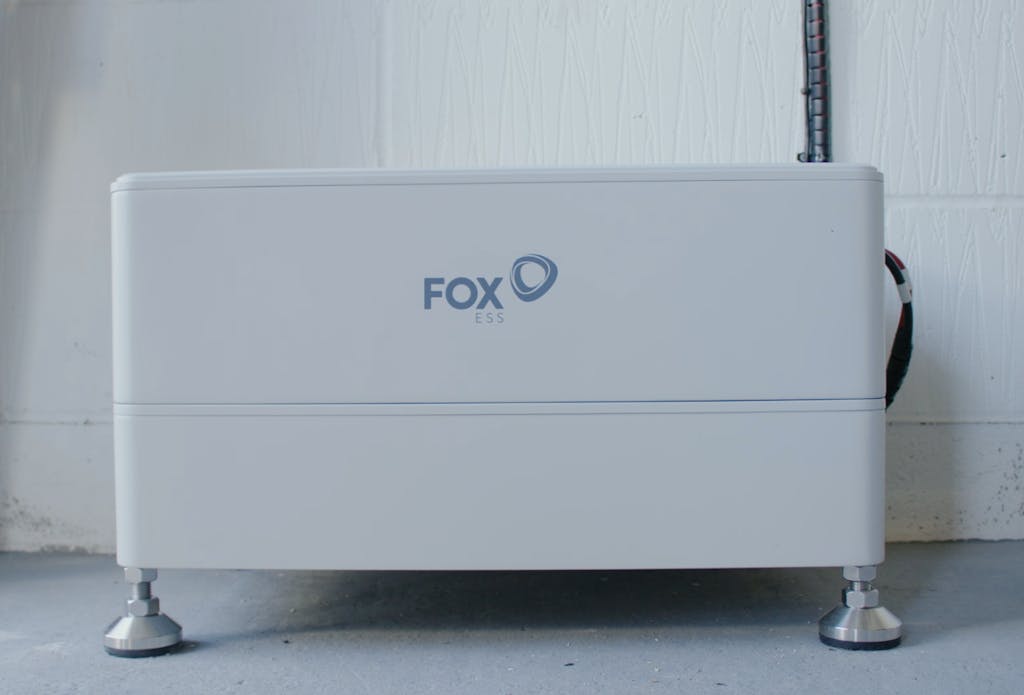
The best location for batteries is outside your home or in your garage, as per the most recent guidelines. This also applies to inverters, since they should stay close to batteries.
This is because high temperatures can significantly speed up your battery’s degradation process, by accelerating SEI growth and causing your battery electrolyte to degrade.
That being said, it’s certainly possible to put your battery in your loft, though this tends to be more complicated.
As well as needing enough space around the battery to stop it from overheating, you’ll also require a fire alarm to be fitted nearby, and multiple people to carry your battery upstairs.
Heat can reduce your battery’s lifespan, whereas extremely cold temperatures tend to only cause short-term issues. What’s more, in winter your machine’s Battery Management System (BMS) will ensure it charges and discharges at a slower rate, to protect it.
2. Number of cycles
Cycling your battery causes degradation, due to Solid Electrolyte Interphase (SEI) growth, Cathode Material Degradation, and the fact that any existing decline is simply made worse by more cycling.
This is the case with most household appliances: the more you run them, the more wear and tear they endure, and the closer they get to the end of their lifespan.
Every single time you cycle a battery, its capacity falls slightly – and the more electricity you discharge, the more intense the effect.
Because of this, battery warranties increasingly include a specific number of cycles, to guard against customers overcycling their machines.
The ideal number of cycles is one per day, which is ideal on a time-of-use tariff: you can fill up your battery with off-peak grid electricity overnight, use some of that energy to run your home during the day, then fully discharge it before the next off-peak period.
If you join a VPP, make sure the operator takes your battery’s lifespan into consideration, and aims to strike a balance between maximising savings and keeping your battery healthy.
To learn more, check out our guide to virtual power plants.
3. Monitoring and maintenance
Keeping an eye on your battery – and getting faults fixed as quickly as possible – is the best way to keep it functioning properly for as long as possible.
Unfortunately, this is a time-consuming process that ultimately requires an expert eye, since even if you spot an issue in good time, you’ll still need to get an engineer to fix it.
If you don’t catch problems early, it can lead to larger difficulties later on, which can result in smaller energy bill savings and a shorter lifespan.
Every Sunsave Plus system is covered by the 20-year Sunsave Guarantee, which includes 24/7 monitoring – so we’ll see problems as soon as they arise, and fix them.
4. Battery type
A battery’s materials and internal chemistry have a big effect on how long it lasts.
Lead-acid batteries, which used to dominate the residential market, only last around three to seven years.
This is markedly worse than lithium-ion batteries, which have taken over as the most popular battery type and usually last 10 to 12 years.
Lithium-ion batteries are now so widespread that you’ll almost certainly get one if you choose a good installer – but it’s still worth checking with them before the install date.
For more information, read our guide to the different types of batteries.
How do you know if your battery needs replacing?
Your battery is unlikely to need replacing until about 10-12 years have passed, as long as you have someone routinely monitoring it to ensure any faults are fixed quickly.
The main sign that you need to upgrade your battery is its capacity shrinking beyond a certain point.
This is the most important feature of a battery when it comes to reducing your energy bills, since it determines the extent to which you can avoid buying expensive grid electricity.
It’s also the part of your battery that declines most noticeably with use and time. You can track its decline in your solar app, simply by regularly checking how many kWh of electricity are in your battery when it’s full.
If your battery's charge or discharge rate slows down, this is usually a sign of a malfunctioning inverter instead of a problem with your battery.
Next steps
When maintained properly, solar batteries can help you make the best use of your solar electricity for around 10-12 years, helping you save thousands of pounds.
However, they decline considerably faster than solar panels, which usually last around 30-40 years – meaning you could end up needing to buy multiple batteries across the lifespan of one solar panel system.
Fortunately, every Sunsave Plus subscription is protected by the 20-year Sunsave Guarantee, which includes a free battery upgrade when required.
If you’re wondering how much a solar & battery system could save you, just answer a few quick questions below and we’ll provide you with an estimate.
Find out how much you can save
What kind of home do you live in?
Solar battery lifespan: FAQs
Related articles
 Josh Jackman
 Josh Jackman
 Josh Jackman
 Charlie Clissitt
Written byJosh Jackman
Josh has written about the rapid rise of home solar for the past seven years. His data-driven work has been featured in United Nations and World Health Organisation documents, as well as publications including The Eco Experts, Financial Times, The Independent, The Telegraph, The Times, and The Sun. Josh has also been interviewed as a renewables expert on BBC One’s Rip-Off Britain, ITV1’s Tonight show, and BBC Radio 4 and 5.