- Solar advice hub
- Exporting-to-the-grid
- The 11 best EV tariffs
The 11 best EV tariffs
Here are the 11 top EV tariffs, as well as how much they could save you and how to sign up for them.


Why you can trust our content
We know that the solar industry is full of misinformation, but we only use reliable sources, including:
- Our experienced solar experts, installers and system designers
- Our own database of solar & battery system designs
- Authoritative bodies like MCS and the UK government



Calculate savings
What kind of home do you live in?


Calculate savings
What kind of home do you live in?
The best EV charging tariffs: at a glance
As EV sales have accelerated in the UK, all the major energy suppliers have launched EV charging tariffs, in an attempt to capture this growing customer base.
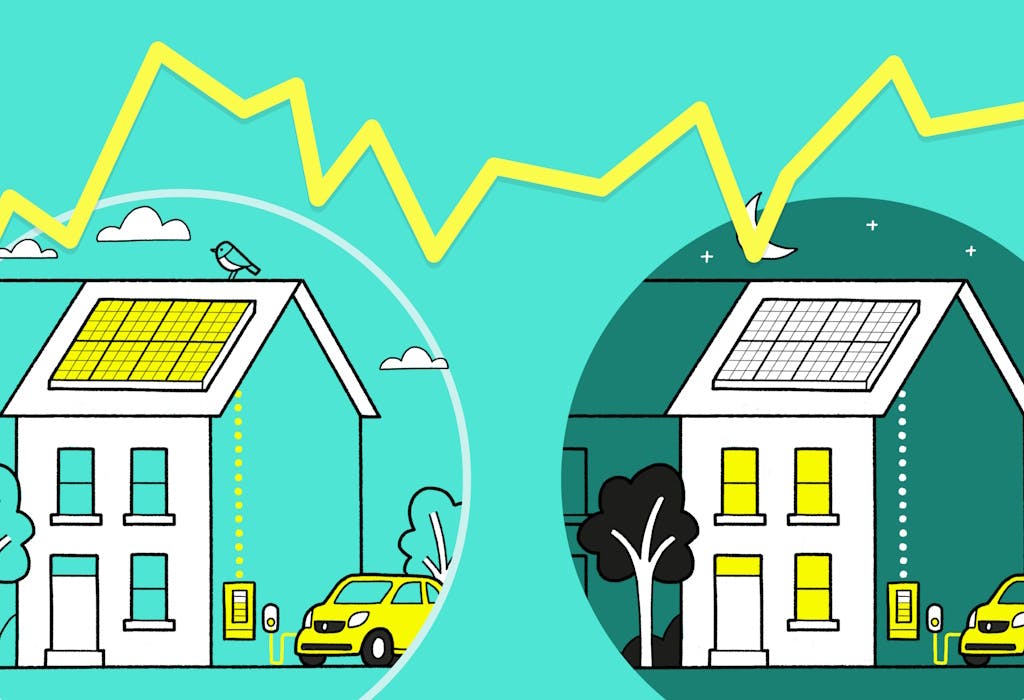
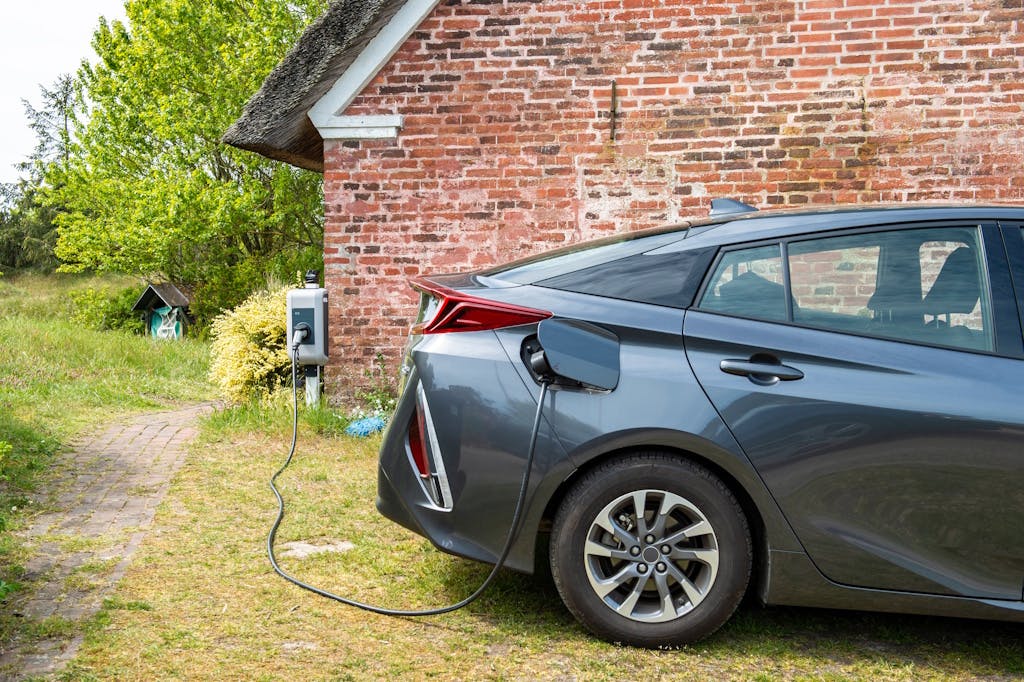
Their main strategy is to offer a low off-peak rate for drivers who charge their car overnight, allowing you to save hundreds of pounds per year by filling your EV with cheap electricity.
In this article, we’ll run through all the top EV charging tariffs, how to sign up for them, and which tariffs are best for different households.
Some EV tariffs don't actually require you to have an EV, making them a great choice for homes with a solar & battery system (as we'll explain).
And to find out how much you could save by going solar, enter a few details below and we'll provide an estimate.
Find out how much you can save
What kind of home do you live in?
What are the best EV charging tariffs?
The best EV charging tariffs are Utility Warehouse's EV Double Gold, EV Gold, and EV Value tariffs, as well as Ecotricity Smart 1 Year Fixed Green Electricity EV.
To save as much money as you can, you should consider each tariff’s off-peak rate and hours, peak rate, standing charge, and any other conditions – including exit fees.
We’ll continue to update this list regularly, since energy companies tweak their tariffs so often.
There are now more than 1.97 million fully electric vehicles in the UK, which represents a 197% rise since the end of 2022, and has naturally led to an uptick in home charging.
Provider | Tariff | Off-peak rate (p/kWh) | Time period | Peak rate (p/kWh) | Standing charge (p/day) | Annual savings * |
|---|---|---|---|---|---|---|
Utility Warehouse | EV Double Gold | 6.9 | 12am-5am GMT | 27.16 | 42.16 | £608 |
Utility Warehouse | EV Gold | 8 | 12am-5am GMT | 30.30 | 44.27 | £484 |
Ecotricity | Smart 1 Year Fixed Green Electricity EV V25.1 | 7.99 | 12am-5am GMT | 31.26 | 41.43 | £482 |
Utility Warehouse | EV Value | 8.5 | 12am-5am GMT | 32.240 | 42.162 | £437.10 |
Outfox Energy | My EV | 7.72 | 12am-5:30am | 30.71 | 50.53 | £436.89 |
EDF | GoElectric 12m | 6.99 | 12am-5am | 30.28 | 57.1 | £422 |
E.ON | Next Drive Smart | 8 | 12am-6am (Flexible) | 28.2 | 60 | £419 |
ScottishPower | EV Saver | 8.5 | 12am-5am GMT | 31.444 | 48.64 | £409 |
E.ON | Next Drive Fixed | 9 | 12am-6am | 29.7 | 60 | £352 |
Good Energy | EV Charge | 9 | 12am-5am | 32.96 | 50.01 | £347 |
Octopus | Intelligent Octopus Go | 8 | 11:30pm-5:30am ** | 34.32 | 52.19 | £330 |
The best EV charging tariffs: explained
Here’s all the information you need about the top 11 EV charging tariffs, including eligibility criteria, how to sign up, and exit fees.
We’ll also tell you which suppliers are charging high peak rates alongside their low off-peak rates.
You may have to switch electricity suppliers to take advantage of these rates – and it’s usually worth it, considering you could save hundreds of pounds per year as a result.
1. Utility Warehouse EV Double Gold
Utility Warehouse combines an attractive 6.9p per kWh off-peak rate with a peak rate and standing charge that are among the best, all to create this top-tier EV tariff.
However, there is a catch: you can only qualify for Double Gold if you receive at least three services from Utility Warehouse.
That includes energy – which you’ll tick off with this tariff – so you’ll have to switch to the provider for two of the following three utilities: wifi, mobile, and boiler and home cover.
Otherwise, it's an excellent tariff, with a peak rate of just 27.16p per kWh that's the best on this list, and a standing charge that's also better than almost all the others.
Look out for the clocks changing, though. This is a GMT-based tariff, so during British Summer Time – which lasts for most of the year – the off-peak rate will be active from 1am to 6am.
Full tariff profile
Category | Information |
|---|---|
Off-peak rate (p/kWh) | 6.9 |
Time period | 12am-5am GMT |
Peak rate (p/kWh) | 27.16 |
Standing charge (p/day) | 42.16 |
Total annual savings * | £608 |
Exit fee | N/A |
How to switch to Utility Warehouse EV Double Gold
As mentioned above, you’ll need to switch to Utility Warehouse for any two of your wifi, mobile, or boiler and home cover before you can qualify.
Once you’ve made it through that process, switch to the supplier’s standard variable tariff, and answer yes when you’re asked whether you’d like to join an EV tariff.
As soon as you’re receiving your electricity from Utility Warehouse, the company will invite you to switch.
You’ll just need a smart meter, your EV’s registration number, the ability to set up a Direct Debit, and at least one EV that’s up to date on its vehicle tax and has a valid MOT certificate.
You can put up to three EVs from the same property on this tariff.
2. Utility Warehouse EV Gold
This is Utility Warehouse’s second-tier EV tariff. It comes with a higher off-peak rate – at 8p per kWh – and a more expensive peak rate of 30.3p per kWh.
The only advantage is that you only need to get two services to qualify, including energy, instead of the three required by Utility Warehouse EV Double Gold.
That does still mean you’ll need to get your wifi, mobile contract, or boiler and home cover from Utility Warehouse.
Full tariff profile
Category | Information |
|---|---|
Off-peak rate (p/kWh) | 8 |
Time period | 12am-5am GMT |
Peak rate (p/kWh) | 30.3 |
Standing charge (p/day) | 44.27 |
Total annual savings * | £484 |
Exit fee | N/A |
How to switch to Utility Warehouse EV Gold
You’ll need a smart meter, an EV, and the ability to set up a Direct Debit to qualify for this tariff, as well as a way of charging your car.
This can technically be a slow charger that plugs into your mains, but we wouldn’t recommend it.
As explained above, you’ll also need to join Utility Warehouse for one other service to be eligible. You can choose from wifi, mobile, or boiler and home cover.
Customers who are already with Utility Warehouse just need to get a quote, then they can switch instantly.
If that’s not you, you just need to move to the supplier’s standard variable tariff, then say yes when they ask if you’re interested in moving to an EV tariff.
You’ll be invited to switch as soon as you’re receiving electricity from Utility Warehouse.
Be ready with the registration number for your EV, which must be up to date on its vehicle tax and MOT.
3. Ecotricity Smart 1 Year Fixed Green Electricity EV
Ecotricity’s offering is a mixed bag.
Its peak and off-peak rates are both middling compared to their rivals, but with a standing charge that's way lower than those offered by competitors.
By paying 44.27p every day instead of the average rate you can find from suppliers on this list – 50.85p per day – a household can save £24 per year.
And simply by standing still from July 2025 until now, Ecotricity's 31.26p per kWh peak rate has gone from being the most expensive rate in this article to just a bit above the average of 30.75p per kWh.
You could still end up paying less to charge your car, but more to power your home – but the goalposts have moved, and this tariff now seems even more appealing than it did a few months ago.
However, it does come with a £100 exit fee, which is the highest of all the EV tariffs. In fact, several companies won’t even charge you for switching.
The 7.99p per kWh off-peak rate is also only available in London, but it’s roughly indicative, since you’ll pay between 7.75p and 8.44p per kWh wherever you are in the country.
Full tariff profile
Category | Information |
|---|---|
Off-peak rate (p/kWh) | 7.99 |
Time period | 12am-5am GMT |
Peak rate (p/kWh) | 31.26 |
Standing charge (p/day) | 41.43 |
Total annual savings * | £482 |
Exit fee | £100 |
How to switch to Ecotricity Smart 1 Year Fixed Green Electricity EV
To switch to this tariff, you need an EV, a charger, and a smart meter.
You’ll also need to pay by monthly Direct Debit.
To start the process, you can apply online or by calling 08081 230 123.
You may need to provide proof that you own an EV charger at home, but generally the whole undertaking should be relatively smooth.
4. Utility Warehouse EV Value
The third and last of Utility Warehouse’s EV tariffs doesn’t require you to take on any extra services.
Its 32.2p per kWh peak rate is higher than most on this page, but it was previously 34.5p per kWh, so this is still an improvement.
With a relatively high off-peak rate of 8.5p per kWh, it's only redeemed by its low standing charge, which is bested by Ecotricity's tariff alone.
Still, you may see your savings disappear if you’re unable to shift most of your electricity consumption to the off-peak hours.
Full tariff profile
Category | Information |
|---|---|
Off-peak rate (p/kWh) | 8.5 |
Time period | 12am-5am GMT |
Peak rate (p/kWh) | 32.24 |
Standing charge (p/day) | 42.162 |
Total annual savings* | £437.10 |
Exit fee | N/A |
How to switch to Utility Warehouse EV Value
You’ll require a smart meter, direct debit, and the registration number of an EV that has a valid MOT certificate and no outstanding vehicle tax.
Homes receiving their electricity from Utility Warehouse can switch by getting a quote online, then accepting it with the associated terms and conditions.
Other households just have to move to the supplier’s standard variable tariff, then indicate that they’d like to join an EV tariff.
As soon as Utility Warehouse finishes setting up your electricity supply, it’ll get in touch to invite you to EV Value.
5. Outfox Energy My EV
Outfox launched My EV in March 2025, and it's since turned into a genuine contender at the top of the EV tariff charts.
It comes with the third-lowest off-peak rate on the market, which it offers for 5.5 hours – half an hour longer than most EV tariffs.
You'll also get a peak rate and standing charge that are slightly below the average in this article, though there is a catch.
To sign up for My EV, you have to be with Outfox for gas and electricity – and there's a £75 exit fee for each fuel.
Full tariff profile
Category | Information |
|---|---|
Off-peak rate (p/kWh) | 7.72 |
Time period | 12am-5:30am |
Peak rate (p/kWh) | 30.71 |
Standing charge (p/day) | 50.53 |
Total annual savings* | £436.89 |
Exit fee | N/A |
How to switch to Outfox Energy My EV
First, you'll need to switch to Outfox for your gas and electricity supply.
You won't be able to sign up to My EV straight away, so you'll have to pick a standard tariff.
Once that's set up, you can join My EV through your online account.
6. GoElectric 12m
This tariff changed dramatically in April 2026, when its off-peak rate fell from 8.99p per kWh to 6.99p per kWh.
That means that despite offering one of the worst standing charges around, it's secured a decent position on this list.
And you can save even more if you're able to get EDF's Smart Charging add-on, which gives you an extra daily off-peak period and £60 per year of energy bill credit.
Your car and charger must be eligible, though. EDF accepts a wide variety of models, but be sure to check here to see if you could qualify.
Unfortunately, that's where the generosity stops, seeing as EDF has tacked on a hefty £75 exit fee to GoElectric.
For more information, read our full guide to EDF GoElectric.
Full tariff profile
Category | Information |
|---|---|
Off-peak rate (p/kWh) | 8.99 |
Time period | 12am-5am |
Peak rate (p/kWh) | 30.28 |
Standing charge (p/day) | 57.1 |
Total annual savings* | £422 |
Exit fee | £75 |
How to switch to EDF GoElectric 12m
If you currently receive your electricity from a different supplier, the first step is to switch to EDF's standard variable tariff, which you can do online.
Once you've completed the move, EDF will start signing you up for GoElectric, which should take just a few days.
As ever, you'll need a smart meter and the capacity to set up a Direct Debit.
7. E.ON Next Drive Smart
E.ON's new flagship EV tariff launched in July 2025, and initially made waves with its 6.5p per kWh off-peak rate – until March 2026.
As the Iran war and the then-upcoming April 2026 price cap started affecting other tariffs on the market, E.ON repeatedly changed its mind.
The off-peak rate rose to 8.5p, fell to 4.99p, then went back up to 8p in a matter of days. It's settled for now, at a below-average rate.
And as long as you use the smart charging function and give enough advance notice, E.ON will ensure your car is charged on the off-peak rate by the time you need it.
However, it's currently only available to a limited number of EV brands.
Also, its 60p per day standing charge is by far the highest of any EV tariff – apart from the other one supplied by E.ON. It'll cost you £33 more per year than this list's average.
Next Drive Smart's peak rate is slightly below average though, and E.ON thankfully hasn't added an exit fee.
Full tariff profile
Category | Information |
|---|---|
Off-peak rate (p/kWh) | 8 |
Time period | 12am-6am (plus extra hours) |
Peak rate (p/kWh) | 28.2 |
Standing charge (p/day) | 60 |
Total annual savings* | £419 |
Exit fee | N/A |
How to switch to E.ON Next Drive Smart
You'll need to have an eligible EV, firstly. E.ON hasn't supplied a list, but you can check whether your car qualifies using this tool.
The provider also requires you to have an EV charger, though this can be any model, and a smart meter.
You can sign up online, as long as you're able to set up a Direct Debit. If you're already with E.ON, you should be switched within five days.
If you're switching from a different supplier, you'll initially be placed on E.ON's standard variable tariff, Next Flex, then be moved onto Next Drive Smart in a process that can take up to two weeks.
You'll then have to download the E.ON Next Home app. Once you have, you can follow the steps in the app to connect your car.
8. ScottishPower EV Saver
EV Saver comes with a decent off-peak rate of 8.5p per kWh, which dropped from 9.5p per kWh in April 2026.
Anyone lucky enough to join before February 2026 could get a 7.2p per kWh off-peak rate, but that's ancient history now.
ScottishPower charges a £50 exit fee and offers a peak rate that's slightly worse than average, though its standing charge is decent.
Anyone looking to switch from a different supplier won't be able to get a quote for EV Saver until they join a ScottishPower tariff.
Full tariff profile
Category | Information |
|---|---|
Off-peak rate (p/kWh) | 8.5 |
Time period | 12am-5am GMT |
Peak rate (p/kWh) | 31.444 |
Standing charge (p/day) | 48.64 |
Total annual savings* | £409 |
Exit fee | £50 |
How to switch to ScottishPower EV Saver
Existing ScottishPower customers can switch to EV Saver in their online account.
If you’re not yet with the supplier, just sign up to its standard variable tariff. Once that’s confirmed, you can get an EV Saver quote and move tariffs straight away.
To qualify, you need a smart meter, an EV, and an EV charger.
You’ll usually have to prove your ownership of all these products.
9. E.ON Next Drive Fixed
E.ON's indecisive March also affected this tariff, which is open to all EVs and chargers, unlike Next Drive Smart.
Its off-peak rate flip-flopped from 7.5p per kWh to 9.5p per kWh, back down to 5.99p per kWh, then up again to 9p per kWh.
With the joint-longest off-peak period around and a below-average peak rate, there's plenty to like about Next Drive Fixed, though it's very much E.ON's second-best EV tariff.
Its off-peak rate is also slightly above average for this list, and E.ON's 60p per day standing charge is extremely expensive.
Full tariff profile
Category | Information |
|---|---|
Off-peak rate (p/kWh) | 9 |
Time period | 12am-6am |
Peak rate (p/kWh) | 29.7 |
Standing charge (p/day) | 60 |
Total annual savings* | £352 |
Exit fee | N/A |
How to switch to E.ON Next Drive Fixed
Eligible households just need a smart meter, a willingness to pay for electricity by monthly direct debit, and an EV.
If you don’t yet have a smart meter, energy suppliers are legally obliged to install one for free, so just ask.
Households with an EV can use any charger to fill their car’s battery, unlike Next Drive Smart.
Once you fulfil the requirements, you can sign up online with basic details like your home address, how long you’ve lived there, and your phone number.
Then all you have to do is set up your direct debit, choose a start date for the tariff, and accept the terms and conditions. E.ON will put you on its standard variable import tariff while it connects to your smart meter.
The switch should take up to five days if you’re already with E.ON, and three weeks at most if you’re moving from a different supplier.
10. Good Energy EV Charge
Previously, EV Charge was the best EV tariff for households without an EV, that were just looking to charge their storage battery with cheap, off-peak electricity, then use it to power their home.
But in April 2026, Good Energy made EV ownership a requirement for anyone joining the tariff.
Its current 9p per kWh off-peak rate is the highest it's ever been, too, having ping-ponged between four different price points in 2026 alone.
Good Energy has also attached an exit fee to its tariff, with early leavers paying £50.
Full tariff profile
Category | Information |
|---|---|
Off-peak rate (p/kWh) | 9 |
Time period | 12am-5am |
Peak rate (p/kWh) | 32.96 |
Standing charge (p/day) | 50.01 |
Total annual savings* | £347 |
Exit fee | £50 |
How to switch to Good Energy EV Charge
You'll need a smart meter and EV to sign up for EV Charge, but that's about it.
If you're switching from another supplier, Good Energy requires you to join its standard variable tariff first – a process that should usually take two days, according to the provider.
You can do this online or over the phone, and will need to set up a Direct Debit.
Good Energy will then spend up to two weeks setting up the connection to your smart meter, at which point the supplier will transfer you seamlessly to EV Charge.
You'll get an email telling you when the switch is complete.
11. Intelligent Octopus Go
This tariff's peak rate is the highest on this list, which may well mean you end up paying more to power your home than you would on a standard tariff.
You’ll have to balance this against the savings you’ll make from charging your car for less.
It's also only available to certain chargers and EVs.
Intelligent Octopus Go had only shifted its off-peak rate once since it launched in 2022 – until March 2026 started.
Octopus raised the rate from 7.5p per kWh to 8p per kWh, briefly lowered it to 5.49p per kWh, then put it back to 8p per kWh.
The tariff offers six hours of cheap charging per day, making it the joint-longest off-peak period on this list – and it’s smart.
That means whenever the grid has a surplus of electricity, Octopus will provide extra off-peak times.
So as well as the fixed 11:30pm-5:30am period, you’ll find out every day at 4pm whether the next day will contain additional off-peak hours to charge your car and power your home.
It does also now come with a £25 exit fee, which is at least below average for this list.
Full tariff profile
Category | Information |
|---|---|
Off-peak rate (p/kWh) | 8 |
Time period | 11:30pm-5:30am (plus extra hours) |
Peak rate (p/kWh) | 34.32 |
Standing charge (p/day) | 52.19 |
Total annual savings* | £330 |
Exit fee | £25 |
How to switch to Intelligent Octopus Go
Intelligent Octopus Go is only open to some chargers and EVs. There’s no publicly available list, but you can check your compatibility using Octopus’s tool.
Our research has shown that most chargers made by Hypervolt, Indra, Myenergi, Ohme, and Wallbox are eligible for the tariff, but this isn’t necessarily an exhaustive list.
Plenty of cars can also help you qualify, including models made by Audi, BMW, Ford, Toyota, and Volkswagen.
As long as you have an eligible EV and charger, all you’ll need to sign up is a smart meter and an Apple or Android device, so you can set your car’s charging schedule.
If you’re already getting your grid electricity from Octopus, you can quickly make the switch in your Octopus app.
If not, you’ll just have to register for a standard Octopus tariff – which should take no more than three weeks – then move to Intelligent Octopus Go.
Once that’s done, just use the app to agree to the terms and conditions, complete a test charge, and you’ll be completely set up.
Summary
The best EV charging tariff depends on your household, though it’s currently likely to be one of Utility Warehouse's EV Double Gold, EV Gold, and EV Value tariffs, or Ecotricity Smart 1 Year Fixed Green Electricity EV.
If you have an EV, it’s absolutely worth seeing if an EV tariff could cut your electricity bills.
Making this switch will usually save you hundreds of pounds per year, which makes it much more affordable to have an EV, and substantially increases your returns from going solar.
And if you’re wondering how much you could save with a solar & battery system, enter a few details below and we’ll provide an estimate.
Find out how much you can save
What kind of home do you live in?
The best EV tariffs: FAQs


Related articles

 Josh Jackman
 Josh Jackman
 Josh Jackman
Written byJosh Jackman
Josh has written about the rapid rise of home solar for the past seven years. His data-driven work has been featured in United Nations and World Health Organisation documents, as well as publications including The Eco Experts, Financial Times, The Independent, The Telegraph, The Times, and The Sun. Josh has also been interviewed as a renewables expert on BBC One’s Rip-Off Britain, ITV1’s Tonight show, and BBC Radio 4 and 5.