- Solar advice hub
- Solar-technology
- Solar tiles: are they worth it?
Solar tiles: are they worth it?
Here's how solar tiles work, what the different types are, how much they usually cost, and all their pros and cons.


Why you can trust our content
We know that the solar industry is full of misinformation, but we only use reliable sources, including:
- Our experienced solar experts, installers and system designers
- Our own database of solar & battery system designs
- Authoritative bodies like MCS and the UK government



Calculate savings
What kind of home do you live in?


Calculate savings
What kind of home do you live in?
Solar tiles: at a glance
Solar tiles allow you to go solar in a subtle way, but they don’t make financial sense unless you’re replacing your whole roof – and even then, solar panels may save you more money.
After all, they’re cheaper, more efficient, more powerful, and more long-lasting than solar tiles.
In this guide, we’ll run through how solar tiles work, what the different types are, how much they usually cost, and all their advantages and disadvantages.
If you’re wondering how much you could save with a solar & battery system, enter a few details below and we’ll provide an estimate.
Find out how much you can save
What kind of home do you live in?
What are solar tiles?
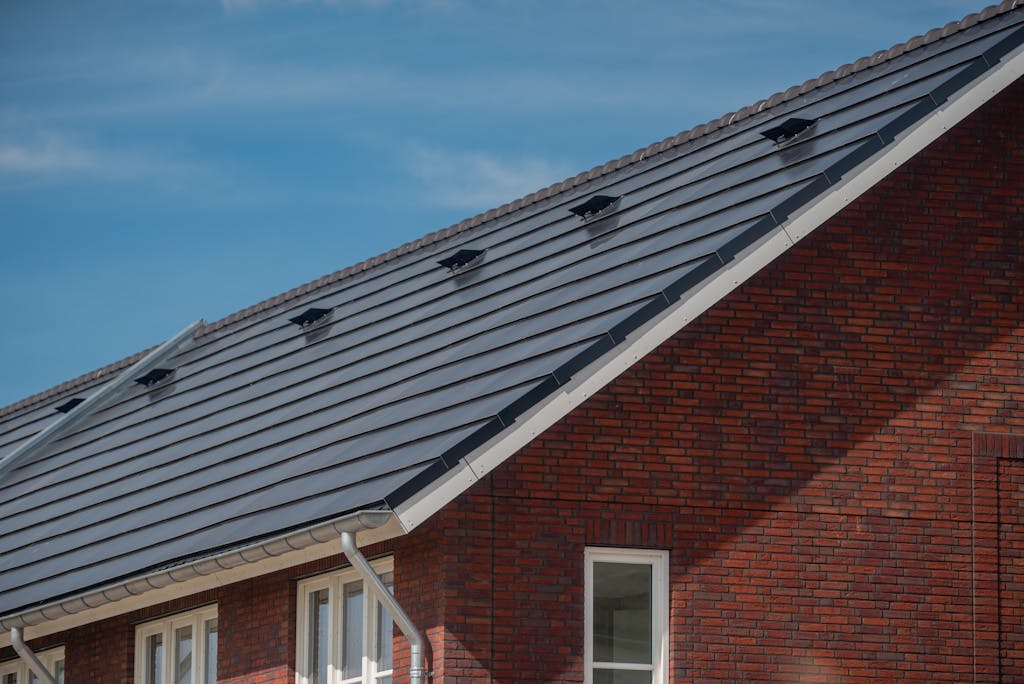
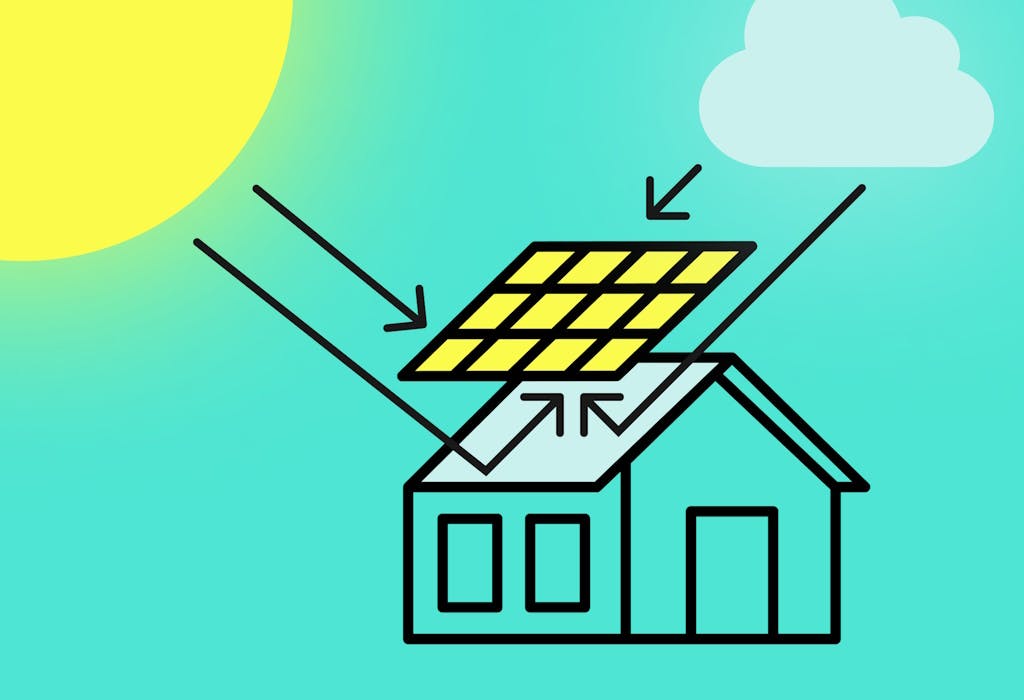
Solar tiles are roof tiles with small solar panel units inside them.
Unlike standard solar panels, which sit on top of your roof, solar tiles are your roof. They do everything a roof does, like protecting your home from the elements and keeping heat in, while their solar cells produce electricity.
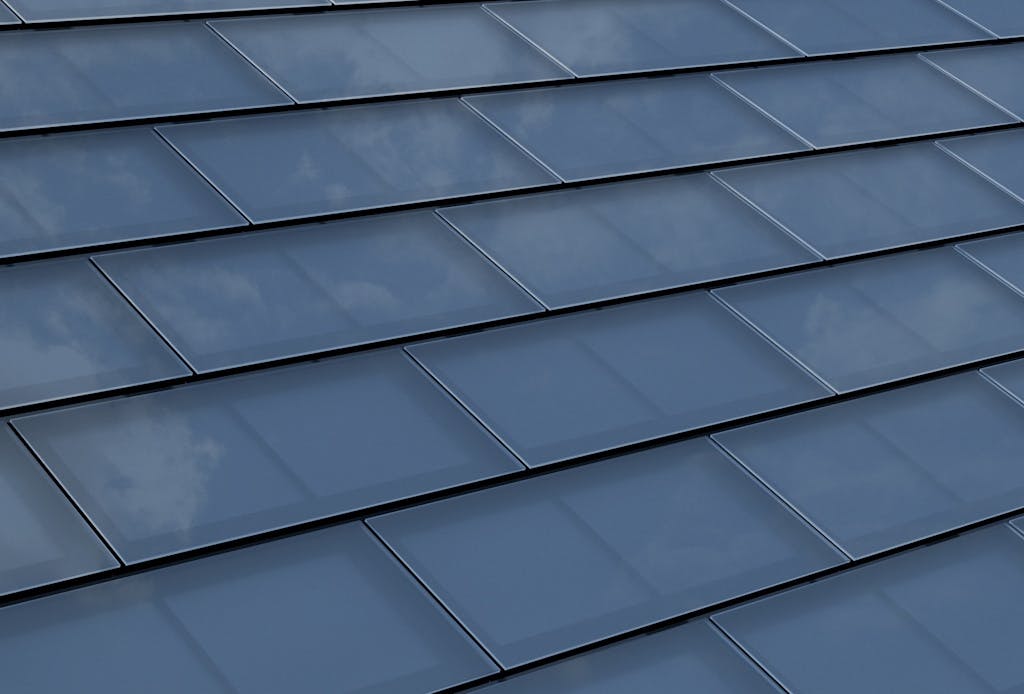
Like roof tiles, these small rectangles are made from durable materials, plus a layer of tempered glass to protect their electronic insides.
They take up around 0.5m², which makes them roughly four times smaller than individual solar panels, and come in black, red, or grey – just like other roof tiles.
They’re also notably less powerful, with an average peak rating of 73W that’s only somewhat explained by their size.
All of this makes solar tiles – also known as solar slates or solar shingles – a decent option if you’re looking to switch to solar without significantly altering the appearance of your property.
However, most UK manufacturers don’t make solar tiles that can fit in alongside regular roof tiles, so they’re usually limited to new builds and whole-roof renovations.
There are other significant downsides to solar tiles, which we’ll explore further down.
How do solar tiles work?
Solar tiles work in much the same way as solar panels: through the photovoltaic effect.
The photons in natural light dislodge the electrons in the silicon atoms contained within each tile’s solar cells.
This creates Direct Current (DC) electricity, which your inverter can convert into Alternating Current (AC) electricity for you to use at home and sell to the grid.
Manufacturers give solar tiles their unique selling point – that they look just like standard roof tiles – with a visual trick that has its roots in the 14th century.
Between sheets of tempered glass, you’ll find a layer of solar cells, covered with a thin film known as a ‘louvre’, which lets light in without allowing viewers to see the machinery below.
The louvre works in the same way that shutters let light into a room while maintaining your privacy. It’s also coloured to match the backing material – for example, clay or slate – to complete the illusion that it’s a regular tile.
For more general information, read our guide to how solar panels work.
How are solar tiles installed?
Your installer will first measure your roof, draw up a plan, and dispose of your old roofing materials, then fit an underlay, usually made of felt.
They’ll also set up most of the wiring needed to take electricity from your solar tiles to your inverter, consumer unit, and battery.
Then it’ll be time to install the solar tiles themselves, usually by connecting them to your roof battens – just like with traditional roof tiles.
Your installer will generally secure each tile with at least two brackets, then wire it to the next one, to ensure that all the solar tiles are electrically linked.
Just like solar panels, solar tiles can’t go all the way up to the edge of your roof. Every solar tile installer should have some identical-looking regular tiles ready for this exact situation.
They’ll then complete all the electrical connections, before testing the system to make sure it works. If it does, you can start generating and using your own supply of solar electricity.
What are the types of solar tile?
There are two main types of solar tile: standard and large.
Standard solar tiles are made to look like regular roof tiles, so their shape and size won’t usually allow for many solar cells.
This means you’ll need to replace many of your regular tiles with solar ones to generate a sufficient amount of electricity – but on the upside, your roof shouldn’t look any different.
Large solar tiles work in exactly the same way as standard ones; you’ll just need fewer tiles to generate the same amount of electricity.
They can stand out more, but generally only if your roof was previously made up of small tiles.
There are also a few different types of solar tiles when it comes to their backing materials: you can get clay, slate, or concrete, all in various different colours.
When are solar tiles a good idea?
Solar tiles are only worth it if you’re already getting your roof replaced, and you don’t want it to look like you’ve switched to solar.
In this case, you’d be paying for scaffolding either way, so going solar at the same time is relatively economical.
And even if you’re able to get an installer to fit solar panels while using the same scaffolding, you’d need to buy tiles and panels – rather than just solar tiles.
However, in-roof solar panels achieve the same result. They’re subtle, sleek, and usually slightly cheaper than solar tiles.
And if you’d rather get a cheaper, more efficient installation that can more effectively reduce your energy bills with less upheaval, solar panels are the best choice.
What about solar tiles for listed buildings?
Solar tiles aren’t usually the answer when it comes to listed buildings.
As they’re less obvious than solar panels, an urban myth has sprung up that claims you can use them to get around planning regulations – but this is wrong.
Historic England advises that “they are generally not suitable for use on prominent roof slopes of listed buildings, and the advantages of mounting them in less visible locations is very limited.”
This is because solar tiles “do not fully replicate the appearance of slates or tiles.”
And even if some solar tiles look convincing at first, the effects caused by sun, wind, rain, hail, and snow can change their appearance in different ways to regular tiles.
They’ll also last about 25-30 years – unlike regular tiles, which have a lifespan of around 60-100 years.
How efficient are solar tiles?
Solar tiles are 12-20% efficient, based on Sunsave’s analysis of the UK market – which currently consists of 10 different models produced by six manufacturers.
This is significantly worse than modern monocrystalline solar panels, which come with 20-25% efficiency ratings.
Solar panel efficiency is the percentage of natural light a solar panel turns into electricity, and directly determines how productive your system will be – and therefore how much you’ll save on your energy bills.
The average solar tile system is 16% efficient – and when put up against a standard solar panel installation with 22.5% efficiency, its inferiority becomes horribly clear.
The same roof that can fit a 3.3kWp solar tile system would be able to take approximately 4.6kWp of solar panels, which means around 40% more electricity for your household.
Considering that going solar can save you hundreds of pounds per year, a 39% difference would make a huge difference, especially over a solar panel system’s lifespan of 30-40 years.
At Sunsave, we install solar panels, as they’re cheaper, more efficient, and more long-lasting. If you’re wondering how much you could save with a solar & battery system, enter a few details below and we’ll provide an estimate.
Find out how much you can save
What kind of home do you live in?
How much do solar tiles cost?
A typical 4kWp solar tile system costs around £12,000, according to the Energy Saving Trust.
This is markedly more expensive than a standard solar panel installation, as we’ll explain further down.
And that’s without even including the cost of removing your existing roof tiles or putting up scaffolding, both of which could add thousands of pounds to the price, depending on how complex your scaffolding has to be.
People with their hearts set on going solar in a subtle manner may see this large premium as justifiable, but if you’re looking for a cost-effective installation, panels are the better option.
Solar tiles vs solar panels
The primary reason for solar tiles to exist is to be a more subtle version of solar panels, and they certainly achieve that.
However, they’re worse than panels in every other category.
That includes cost, efficiency, power, and lifespan, which we’ll run through below.
Cost
Regular solar panels are much cheaper than solar tiles.
And the estimate below for solar tiles is conservative, as we haven’t included the cost of scaffolding or removing the current roof.
| System size | Rough cost (solar tiles) | Rough cost (solar panels) |
|---|---|---|
| 4kWp | £12,000 | £7,384 |
The cost of 4kWp-10kWp solar panel systems is £1,846 per kWp, according to the UK government.
To maximise your earnings and savings, add a solar battery. They help you use more of the electricity your panels produce, take advantage of time-of-use tariffs and the best export tariffs, and join virtual power plants.
A 5kWh battery costs around £3,000, which means the average 4kWp solar & battery system would be cheaper than just solar tiles.
And as we mentioned above, erecting scaffolding and taking off the existing roof will add substantially to the price of solar tiles. It’s reasonable to estimate you’ll pay a few thousand pounds more.
If you’re one of the many people put off by the high upfront cost of solar, it’s worth considering Sunsave Plus, the UK’s first solar subscription, which lets you switch to solar with no upfront cost, and instead make fixed monthly payments.
And for more general information, read our full guide to solar panel costs.
Efficiency
Modern monocrystalline solar panels are much more efficient than solar tiles.
Based on our extensive research, panels are usually 20% to 25% efficient, whereas tiles sit exclusively in the 12% to 20% range.
That means the average panel is roughly 40% more efficient than the average tile.
Solar tiles are less efficient partly because of a flaw in their design: they replace the roof, which means there’s no space left immediately below to cool them down.
Without this ventilation that panels benefit from, a significant amount of energy is lost in the form of heat.
Solar tiles are also smaller, which means a higher percentage of their form is made up of the frame – and the more space given to parts of a solar device that don’t generate electricity, the less efficient it’ll be.
The other main reason for solar tiles being less efficient is financial. Fewer large companies are dedicating research and development funding to this area – and without this impetus, progress is slower.
You can deal with this shortfall by getting as many solar tiles as possible, but you only have a limited amount of space on your roof – and using it for solar panels will likely be more cost-effective.
After all, a 40% higher efficiency rating means getting 40% more electricity from the same roof, all being equal.
The more electricity your system generates, the less you’ll need to buy, and the more you can sell to the grid. You should break even much earlier, and ultimately save thousands of pounds more.
To learn more, check out our guide to the most efficient solar panels.
Power
Current monocrystalline solar panels are much more powerful than solar tiles.
This category is less important than efficiency, since the peak power rating of a panel or tile doesn’t matter compared to the amount of electricity you can generate with your whole system.
But it’s still indicative of the relatively underdeveloped nature of solar tiles, which are around 60W to 120W, compared to solar panels’ 400W to 700W ratings.
On average, solar panels are roughly 650% more powerful than solar tiles.
This is largely explained by the fact that solar tiles are smaller, and it means that if you have a particularly limited amount of roof space, tiles may not be the right choice for you.
To read more, see our guide to the most powerful solar panels.
Lifespan & maintenance
Solar tiles have a lifespan of around 25-30 years, meaning they generally last for less time than solar panels’ lifespan of 30-40 years.
These are rough industry estimates, but the truth is contained within the warranties you can get for the two devices.
According to Sunsave’s research, the average product warranty for solar panels is 19 years, compared to 14 years for solar tiles.
And when it comes to performance warranties, the difference is even starker. The average solar tile comes with a guarantee that it’ll produce 81.6% of its original output after 25 years, and 85% is the highest percentage promised.
The standard guarantee for solar panels is now 87.4% after 30 years, and it’s extremely rare for panels to promise less than 85% after 25 years.
In fact, we’ve looked at the offerings of the 37 biggest solar panel manufacturers whose products are available in the UK, and only four panels fall into this lowest category.
But any solar installation, whether it’s designed with tiles or panels, will require maintenance support over its decades-long lifespan.
34% of inverters fail by year 15, according to a study in 2023 by Bern University of Applied Sciences , and solar batteries generally last 10-12 years at peak performance, before they start to decline and need replacing.
Both the inverter and battery play a vital part in keeping your system functioning at its best, which allows you to save as much as possible on your energy bills.
Thankfully, every Sunsave Plus system comes with the Sunsave Guarantee, a comprehensive support package that provides a free battery upgrade and a replacement inverter if required, and downtime cover.
Also, your system will be insured against damage, fire, and theft.
For a full run-down, read our guide to the Sunsave Guarantee.
Aesthetics
Solar tiles are generally seen as the more aesthetically pleasing option, because they don’t (literally) stand out from your roof, and instead blend in with their surroundings.
The most pleasing solar tile designs make it impossible to tell whether you have an installation on your roof at all.
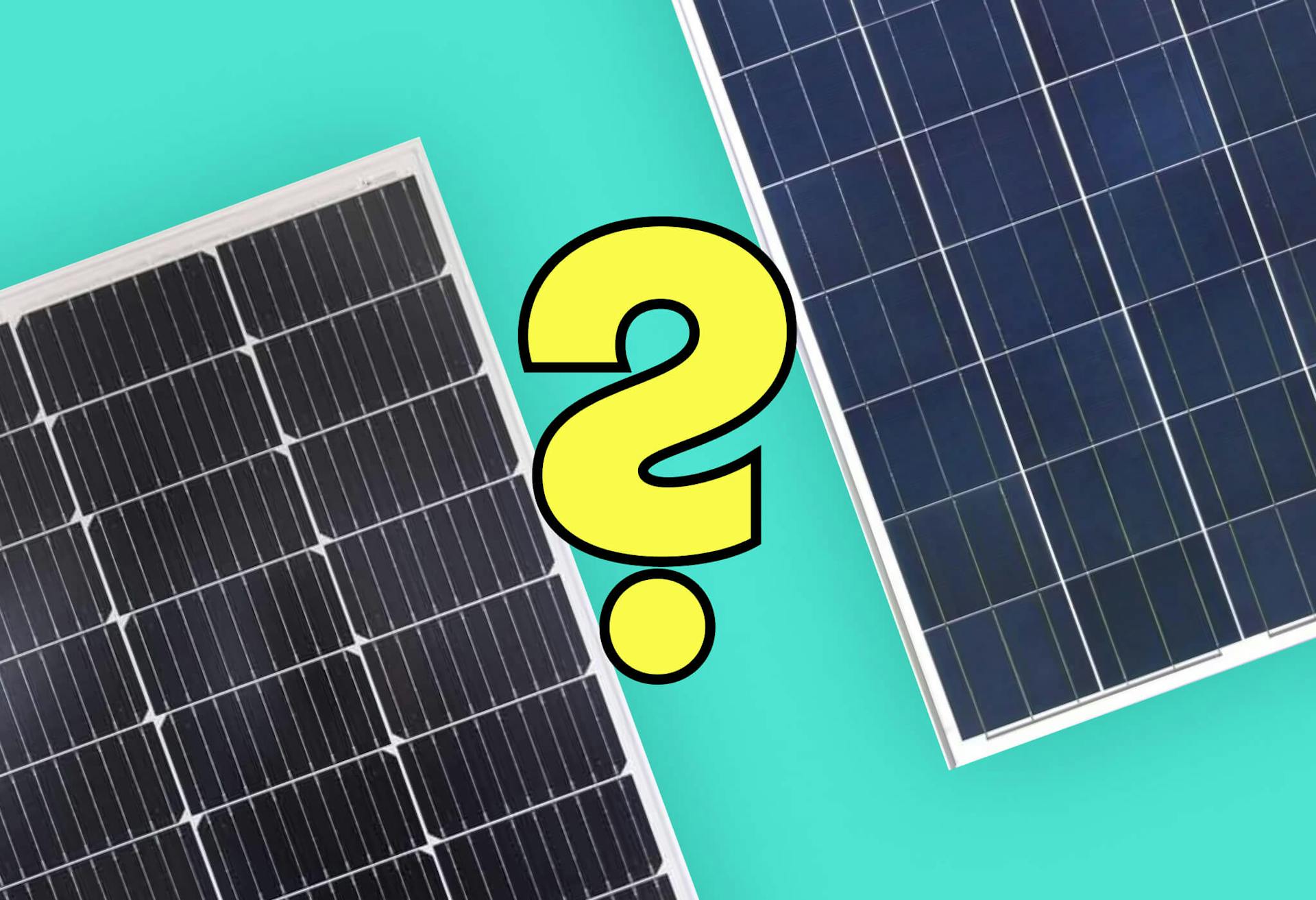
However, modern solar panels are much sleeker than they used to be, as black monocrystalline systems offer an appealing sight that’s worlds away from the old, blue polycrystalline panels.
Manufacturers are also increasingly switching from white grid lines to an all-black design that looks undeniably stylish.
Are solar tiles worth it?
Solar tiles are only worth it for homeowners who already need to replace their roof, and want a solar installation that doesn’t draw any attention.
Otherwise, solar panels are cheaper, more efficient, more powerful, and last longer than solar tiles, to the extent that a household can save many thousands of pounds more over their system’s lifespan.
In fact, on average, you could save 94% on your electricity bills with a traditional solar & battery system.
This is based on projected first-year savings from a sample of over 600 systems installed by Sunsave across the UK in 2025. The average system is 5kWp, with 44% of solar electricity used at home and 56% exported to the grid. Actual savings with solar will vary depending on several factors, including your property and system.
We don't offer solar tiles at Sunsave, but if you’d like to find out how much a regular solar & battery system could save you, enter a few details below and we’ll provide an estimate.
Find out how much you can save
What kind of home do you live in?
Solar tiles: FAQs


Related articles
 Josh Jackman
 Melody Abeni
 Melody Abeni
 Josh Jackman
Written byJosh Jackman
Josh has written about the rapid rise of home solar for the past seven years. His data-driven work has been featured in United Nations and World Health Organisation documents, as well as publications including The Eco Experts, Financial Times, The Independent, The Telegraph, The Times, and The Sun. Josh has also been interviewed as a renewables expert on BBC One’s Rip-Off Britain, ITV1’s Tonight show, and BBC Radio 4 and 5.