- Solar advice hub
- Batteries
- Is the Tesla Powerwall worth it in the UK?
Is the Tesla Powerwall worth it in the UK?
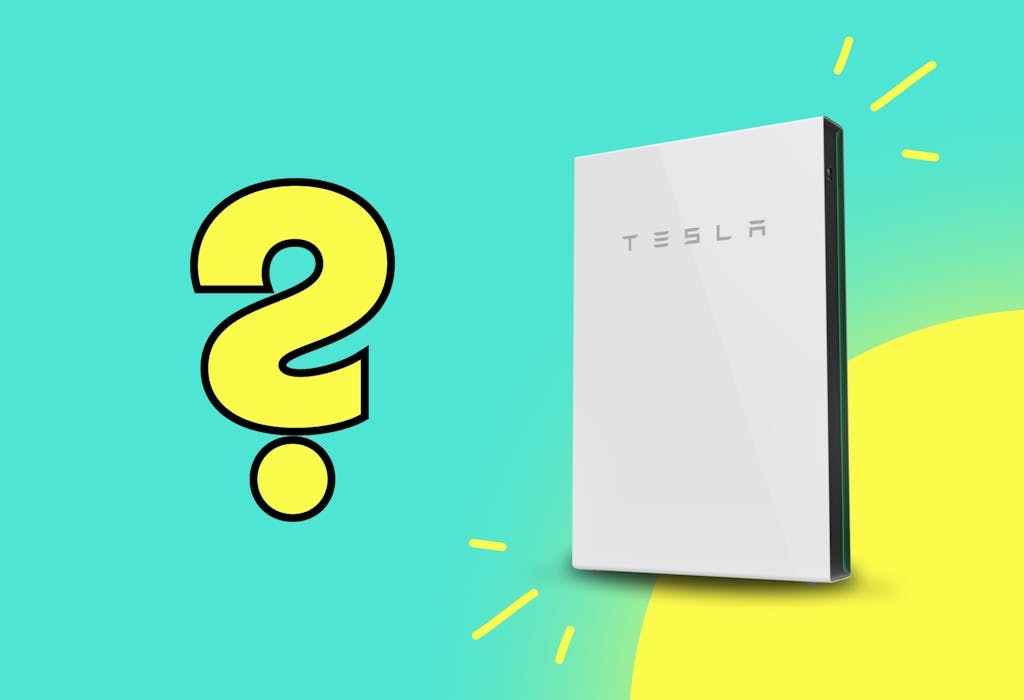
Here are the Powerwall 3’s key features, why it's better than previous models, and whether it's worth its hefty price tag.


Why you can trust our content
We know that the solar industry is full of misinformation, but we only use reliable sources, including:
- Our experienced solar experts, installers and system designers
- Our own database of solar & battery system designs
- Authoritative bodies like MCS and the UK government



Calculate savings
What kind of home do you live in?


Calculate savings
What kind of home do you live in?
Tesla Powerwall: at a glance
When you’re buying a storage battery, you want an efficient, reasonably priced machine that suits your solar panel system and your home’s electricity consumption.
The Tesla Powerwall 3 comes with some impressive attributes, but none of these justify its large price tag.
In this guide, we’ll explain the Powerwall 3’s key features, the ways in which it differs from the Powerwall 2, and why it's not worth the investment.
At Sunsave, given the Powerwall 3 is unsuitable for most UK homes, we use other top-of-the-range battery models for a more affordable price.
If you’re wondering how much you could save with a solar & battery system, enter a few details below and we’ll provide an estimate.
Find out how much you can save
What kind of home do you live in?
What is the Tesla Powerwall?
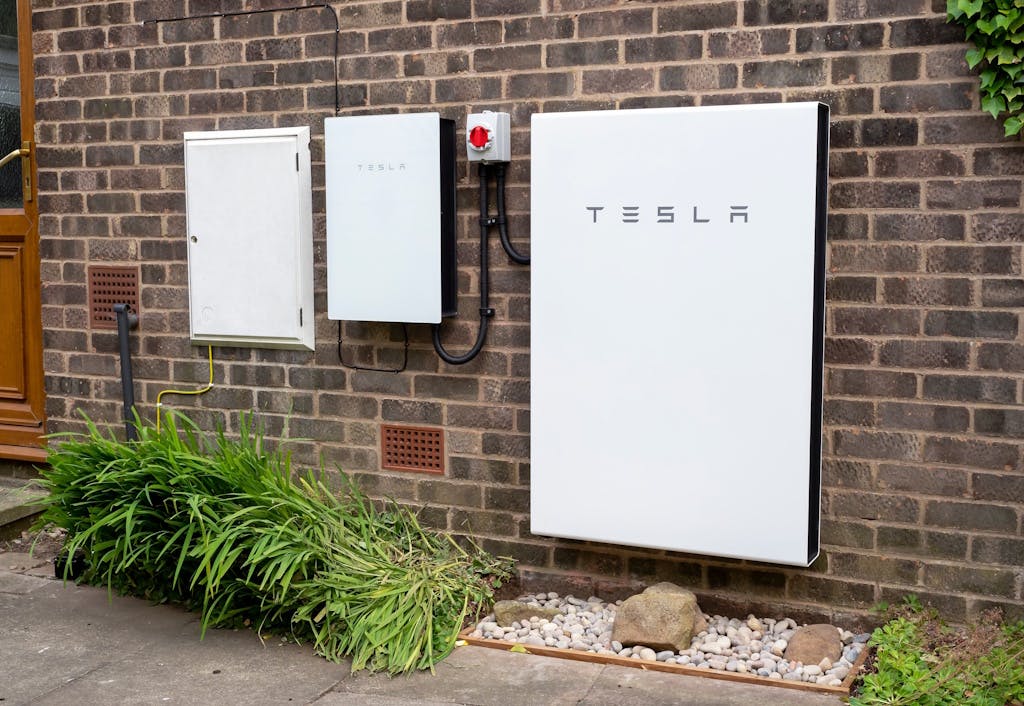
The Tesla Powerwall is a home battery that can be installed on a floor or wall.
Like other batteries, it can be connected to a solar array or operate by itself. Without solar panels, you can use it to import off-peak grid electricity overnight, then run your home on that cheaper power.
If you do have a solar installation, a battery allows you to store excess electricity generated during the day, so you can power your home after the sun goes down.
You can also access better export tariffs with a battery, enabling you to earn as much as possible from the excess electricity you send to the grid.
The Powerwall is one of the biggest names in the battery industry, with more than a million installed worldwide.
Its third edition was launched in the UK in 2024, which followed the Powerwall 2 coming out here in 2017, and the first Powerwall 1 in the UK being installed in 2016.
It was a long wait for the Powerwall 3, but it comes with a host of impressive features, in addition to its hefty price tag.
How much does the Tesla Powerwall 3 cost?
The Tesla Powerwall 3 costs around £7,000-9,000, including installation – which makes it expensive, even for a 13.5 kilowatt-hour (kWh) battery. For example, the starting price from Spirit Energy is ~£7,750.
You can generally get a top-tier battery that suits your home for around half that price. To learn more, read our guide to how much a solar battery costs in the UK.
You'll pay far more for the Powerwall 3, for minimal gain other than the famous brand name (see next section).
If you’re paying upfront, a larger price means waiting longer to break even, so it’s only worth buying an expensive model if you can justify it.
Why Tesla Powerwall 3 isn’t worth the premium
Based on our analysis of 68 different battery models on the UK market, the Powerwall 3 only wins in three out of 11 categories.
It’s the only battery that's IP67 rated, meaning it's dust-tight and can be temporarily immersed in a metre of water for 30 minutes with no ill effects.
However, most top-tier batteries are IP65 or IP66 rated, and are therefore protected against dust and projected water – which is more than good enough.
The Powerwall 3's warranty allows you an unlimited amount of cycles, which is appealing, even if Tesla isn't the only company to offer this.
The warranty only lasts for an industry-average 10 years though, which devalues the power of unlimited cycles.
In most cases, you won't benefit from cycling your battery more than twice per day, which is only around 7,300 in the warranty period – less than companies like Alpha ESS, Duracell, and Sonnen offer.
It's better to cycle your battery once per day, as manufacturers recommend, under a warranty that simply covers you for longer.
The Powerwall 3 does also come with 100% Depth of Discharge (DoD), which is the maximum percentage of a battery’s capacity you can safely use.
This is an advantage, since it means you can use the entire battery's capacity, but numerous other models come with the same feature, including the VARTA.wall and LG 10H Prime – and many of them are cheaper.
We'll go into more detail about the various attributes of the Powerwall 3 in the next section.
To find out more about other top contenders, read our guide to the best batteries in the UK.
Key features of the Tesla Powerwall 3
The most important aspects of the Tesla Powerwall 3 range from basic attributes like its storage capacity and discharge speed to less common features like backup power and expansion packs.
We’ll run through these features in more detail, and explore which ones are worth having in your home.
Key feature | Tesla Powerwall 3 |
|---|---|
Capacity | 13.5kWh |
Continuous discharge power | 11.04kW |
Depth of Discharge | 100% |
Energy scalability | Up to 3 expansion units |
Home backup for power cuts | Yes (with the Backup Gateway 2) |
Dimensions | 1105 x 609 x 193 mm |
Ingress rating | IP67 |
Warranty | Unlimited cycles / 10 years |
Virtual power plant | Yes |
1. Storage capacity
You’ll get a storage capacity of 13.5kWh with the Powerwall 3, which is the same as the Powerwall 2.
It can certainly be worth getting a larger battery like this, as long it fits your home's needs.
A battery will allow you to increase your self-consumption – that is, the amount of your solar-generated electricity you use – by allowing you to run your home on solar at night.
This means you don’t have to be home all day to get the most out of your panels, which means you can save more on your energy bills.
If your solar panels produce enough electricity to fill the Powerwall 3, its large storage capacity could pay off nicely – especially if you sign up to a time-of-use tariff.
The Powerwall 3 has a charging speed of 5kW, meaning it takes less than three hours to charge up fully from the grid, which is shorter than all the cheapest off-peak periods.
To learn more, read our guide to solar battery sizing.
2. Continuous discharge power
The Powerwall 3 can provide 11.04kW of continuous discharge power, meaning it's able to discharge in about 1.2 hours.
The average UK household using 3,400kWh per year wouldn’t need this much power at one time frequently enough to make it a wise investment.
Paying much more for a battery with this capability wouldn't make sense for most households, even if it is useful.
When you’re selling electricity to the grid, being able to export at a faster rate could allow you more time to recharge your battery with solar electricity, and earn more from using it or sending it to the grid.
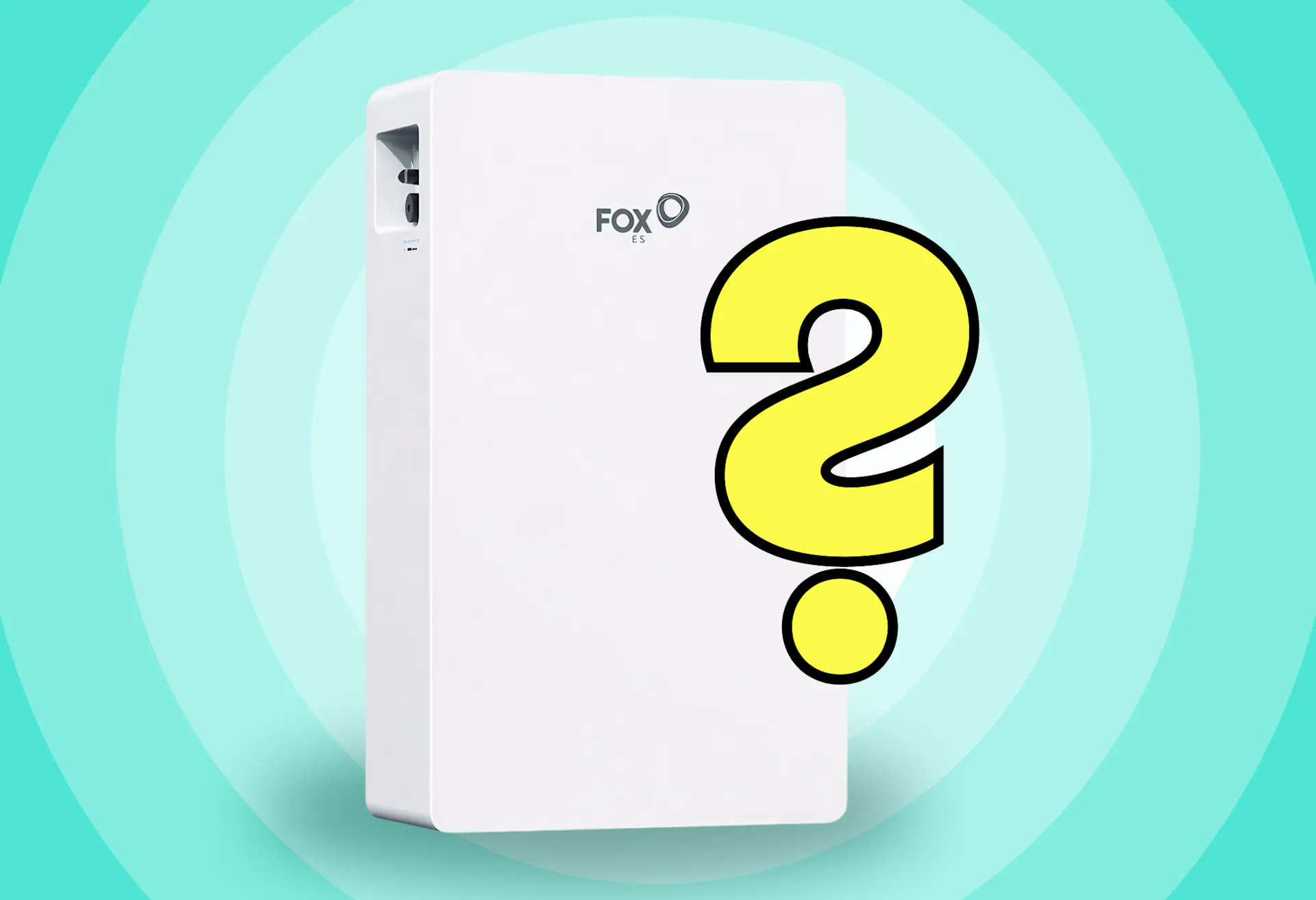
However, even if you value this ability, the Powerwall 3 isn't the best model on the market. That honour goes to the Fox ESS EP12, which has a 11.52kW discharge rate.
Speak to one of the best solar installers around to find out whether your battery should have a high continuous discharge rating.

3. Depth of Discharge
As mentioned earlier, the Powerwall 3 comes with a 100% DoD, meaning you can use the battery's entire 13.5kWh capacity to store electricity.
This is increasingly common though, with brands like LG and VARTA having released models with the same capability.
100% DoD isn't even that far above the market average now, which is 93.6%.
4. Energy scalability
The Powerwall 3 is modular, allowing you to grow your battery storage capacity as your electricity needs develop.
This is useful if you’d like to get a heat pump or air conditioning for instance, but don’t know when or if you’ll be able to buy them – or if you simply can’t afford a larger battery system right now.
It allows you to easily slot another module into the same system, rather than adding a whole extra battery and trying to connect the two.
You can add up to three expansion packs, though they only come in one size: 13.5kWh, like the Powerwall 3.
This is unusual, since extra modules are usually meant to provide small, affordable boosts to your capacity. FOX ESS, for instance, makes battery modules ranging from 2.9kWh to 4.7kWh.
You could theoretically own 54kWh of battery storage with a Powerwall 3 and three expansion packs, though it’s not clear why any UK household would need that much.
They’re also 110kg a piece, and the same height and width as the Powerwall 3, making it even more difficult to fit the system into a standard property.
Ideally, Tesla would’ve offered smaller expansion packs, or a variety of sizes, but this may simply be a rare example of the company failing to consider markets with lower consumption levels – like the UK.
If you’re wondering how much you could save with a solar & battery system, enter a few details below and we’ll provide an estimate.


5. Home backup for power cuts
Most solar & battery systems automatically disconnect from the grid in blackouts, but some – including the Powerwall 3 – have a home backup function.
This allows it to run some or all of your electrical devices during a power cut.
However, it’ll only work if an electrician activates this feature and fits the hardware needed, which includes a Tesla Backup Gateway 2, and could involve sockets, wiring, and an extra fuse box, depending on which circuits you want to include.
Tesla has created a cheaper alternative called the Backup Switch – but that’s only available in the US.
Full home backup can cost you thousands of pounds, and considering the average UK home only experiences 0.4 power cuts per year, and loses electricity for about 36 minutes overall, it isn’t usually a price worth paying.
Full home backup also typically requires a 40% larger battery, which will add to your costs.
Unless power cuts are a regular, damaging part of your life, or you have crucial medical items like a dialysis machine that require constant power, home backup is generally an expensive, needless extra.
There’s more demand for home backup in the US, where the average household spends 5.5 hours per year without grid power .
However, if you do activate Powerwall 3’s backup feature, you’ll gain access to Storm Watch. This uses local weather data to see when a storm’s coming and charge up to full in advance, in case the weather leads to a power cut.
6. Size
Despite containing inverter hardware and offering upgraded capabilities, the Powerwall 3 is actually smaller than its immediate predecessor.
It’s 4.5cm shorter and 14.6cm narrower, though it is 3.8cm deeper.
However, it’s still larger and heavier than most batteries. For example, it’s 20cm taller and 7cm wider than the 15kWh SolaX T-BAT-SYS-LV D150.
This is less than ideal for households that have limited space available for a battery.
The Powerwall 3 is also 130kg – 5kg heavier than SolaX's machine – making it relatively difficult to move.
Most properties don’t have many suitable places to house a sizable, hefty piece of electrical hardware, and the bigger it is, the less likely it is that you’ll have a spot that works.
7. Ingress rating
As we explained before, the Powerwall 3 is the only IP67 rated home battery on the market.
The '6' means the battery is completely dust-tight, while the '7' refers to its ability to endure a metre of standing water for 30 minutes. This is thanks to its laser-welded bottom half.
Most batteries are IP65 or IP66 rated, which means they're able to withstand dust to the same level, and can deal with projected water rather than being partly immersed.
This is good enough for the vast majorities of households.
8. Warranty
As mentioned earlier, your warranty will allow you an unlimited number of cycles.
However, its 10-year limit makes this less impressive. Effectively, you can use the battery all you like, but your warranty will still run out at the industry standard end point.
You probably won't profit from cycling it more than twice per day, so 'unlimited' in this context equates to around 7,300 times – which, again, is unremarkable for a battery warranty.
Tesla also guarantees that your battery will work at 80% of its initial performance throughout this period, which is decent.
The company does require that your Powerwall 3 be “reliably connected to the internet to secure the full 10-year warranty”, though – so make sure you fulfil that condition.
This is a good warranty, but brands including Alpha ESS and Enphase offer the same level of coverage for some of their batteries.
Some manufacturers, like EcoFlow, Enphase, and Fox ESS, provide even longer warranties. They last 12 or even 15 years, though they naturally come with lower performance guarantees of around 60-70%.
You’ll usually want to get a new battery after 10 to 12 years anyway, to keep getting the best out of your system – and the Sunsave Guarantee provides a free battery upgrade when it’s needed.
For more information on battery lifespans, read our guide to how long solar batteries last.
9. Virtual power plant
A virtual power plant (VPP) is when a company brings together lots of people with batteries, solar panels, and other smart technology into one collective.
The firm uses these devices to withdraw, store, and pour electricity to and from the grid.
This helps to balance supply and demand levels and avoid power cuts, which is a service the grid will pay for.
In this way, households can benefit from energy trading on a much larger scale than they'd be able to access by themselves, and without lifting a finger.
Tesla launched its own VPP in 2025. Powerwall owners can join and receive payouts every time their battery participates in a high-demand event, potentially earning hundreds of pounds per year.
VPPs are increasingly common, though. Kraken, EDF, Octopus, and Axle all offer VPPs - and everyone involved can profit, as VPPs are designed to create earnings for all participants.
To find out more, read our full guide to virtual power plants.
If you’re wondering how much you could save with a solar & battery system, enter a few details below and we’ll provide an estimate.
Find out how much you can save
What kind of home do you live in?
How is the Tesla Powerwall 3 installed?
The Tesla Powerwall 3 can be mounted on a suitable wall or floor, like most batteries on the market.
It should be installed in a garage that adjoins your household, an outside wall, or a utility or plant room that doesn't block a potential escape route.
If you don’t have a garage or adequate space outside, you may struggle to find a suitable spot, since it’s hard to find a well-ventilated place inside that has space for the Powerwall 3, and which isn’t on an escape route.
Tesla Powerwall 3 vs Powerwall 2
When Tesla launched the Powerwall 3 in June 2024, it included a few major improvements on the Powerwall 2.
Here are the four key ways in which the Powerwall 3 is different:
- All-in-one system
- DC-coupled
- More power
- Better battery chemistry
1. All-in-one system
Inside the Powerwall 3 is an inverter, making it an all-in-one system (also known as a hybrid system).
This is different to the Powerwall 2, which requires a separate inverter.
All-in-one designs are becoming increasingly common, with leading battery companies like Enphase, Sunsynk, and Powervault jumping on the trend.
2. DC-coupled
If you have solar panels at your home as well as a Powerwall 3, it'll be DC-coupled.
This means it'll be connected straight to your panels, which is the most efficient way of fitting a solar battery.
It allows all the electricity your system produces to travel straight into your battery, meaning it only ever has to be converted from DC to AC once, when your battery discharges it to your home or the grid.
If you don't have a solar array, your installer will fit the Powerwall 3 as an AC-coupled system, linked directly to your fuse board.
The Powerwall 2 could only ever be AC-coupled, which made it less suitable – and efficient – for solar homes.
3. More power
As we mentioned above, the Powerwall 3 comes with an 11.04kW continuous power rating.
This is 121% higher than the Powerwall 2’s 5kW rating, but is unnecessary for most UK homes.
And even if you do need that much electricity at once, Fox ESS's EP12 model is slightly more powerful.
4. Better battery chemistry
The Powerwall 3 contains cathode material made of lithium iron phosphate (LFP), replacing the Powerwall 2’s nickel, manganese, and cobalt (NMC) cathode.
This shift reflects an industry-wide move towards LFP batteries, which are safer than NMC cells, have a longer lifespan, and are more thermally stable – meaning they’re less likely to catch fire.
LFP technology has come on leaps and bounds in recent years to become the best cathode material on the market. It’s also part of why this battery is a little heavier than its forerunner, but that’s a small drawback.
Is the Tesla Powerwall worth it?
The Powerwall 3 is certainly an upgrade on the Powerwall 2 – as you might expect, considering the seven-year gap between their release dates. It's more efficient for solar homes, more powerful, and better chemically.
However, none of its standout traits are particularly important or special, and as a result, it doesn't justify its inflated price tag.
It’s also difficult and expensive to scale up, with extra modules that are roughly as big as the original model – both in terms of their capacity and physical size.
At Sunsave, given the Powerwall 3 is unsuitable for most UK homes, we use other top-of-the-range battery models for a more affordable price.
If you’re wondering how much you could save with a solar & battery system, enter a few details below and we’ll provide an estimate.
Find out how much you can save
What kind of home do you live in?
FAQs




Related articles
 Josh Jackman
 Melody Abeni
 Josh Jackman
 Josh Jackman
Written byJosh Jackman
Josh has written about the rapid rise of home solar for the past seven years. His data-driven work has been featured in United Nations and World Health Organisation documents, as well as publications including The Eco Experts, Financial Times, The Independent, The Telegraph, The Times, and The Sun. Josh has also been interviewed as a renewables expert on BBC One’s Rip-Off Britain, ITV1’s Tonight show, and BBC Radio 4 and 5.