- Solar advice hub
- Exporting-to-the-grid
- Virtual power plants: are they worth it?
Virtual power plants: are they worth it?
Here's how virtual power plants work, why we need them, which ones are available now, and whether you should join one.


Why you can trust our content
We know that the solar industry is full of misinformation, but we only use reliable sources, including:
- Our experienced solar experts, installers and system designers
- Our own database of solar & battery system designs
- Authoritative bodies like MCS and the UK government



Calculate savings
What kind of home do you live in?


Calculate savings
What kind of home do you live in?
What you need to know
Every household with a solar & battery system wants to make more money from its setup – and virtual power plants (VPPs) are an exciting new way to do just that.
By grouping together with other renewable energy generators, you could provide a valuable service to the grid, and make plenty of money doing it.
And the global VPP market is on the rise, with experts projecting that it’ll be five times as valuable in 2033 as it was in 2025 – so it’s a great time to get on board.
In this guide, we’ll explain how VPPs work, why we need them, and whether you should join one, as well as running through some examples from around the world.
We have our own Virtual Power Plant, and every Sunsave customer with compatible hardware can join it for free. To find out how much you could save with Sunsave, enter a few details below and we’ll provide an estimate.
Find out how much you can save
What kind of home do you live in?
What is a virtual power plant?
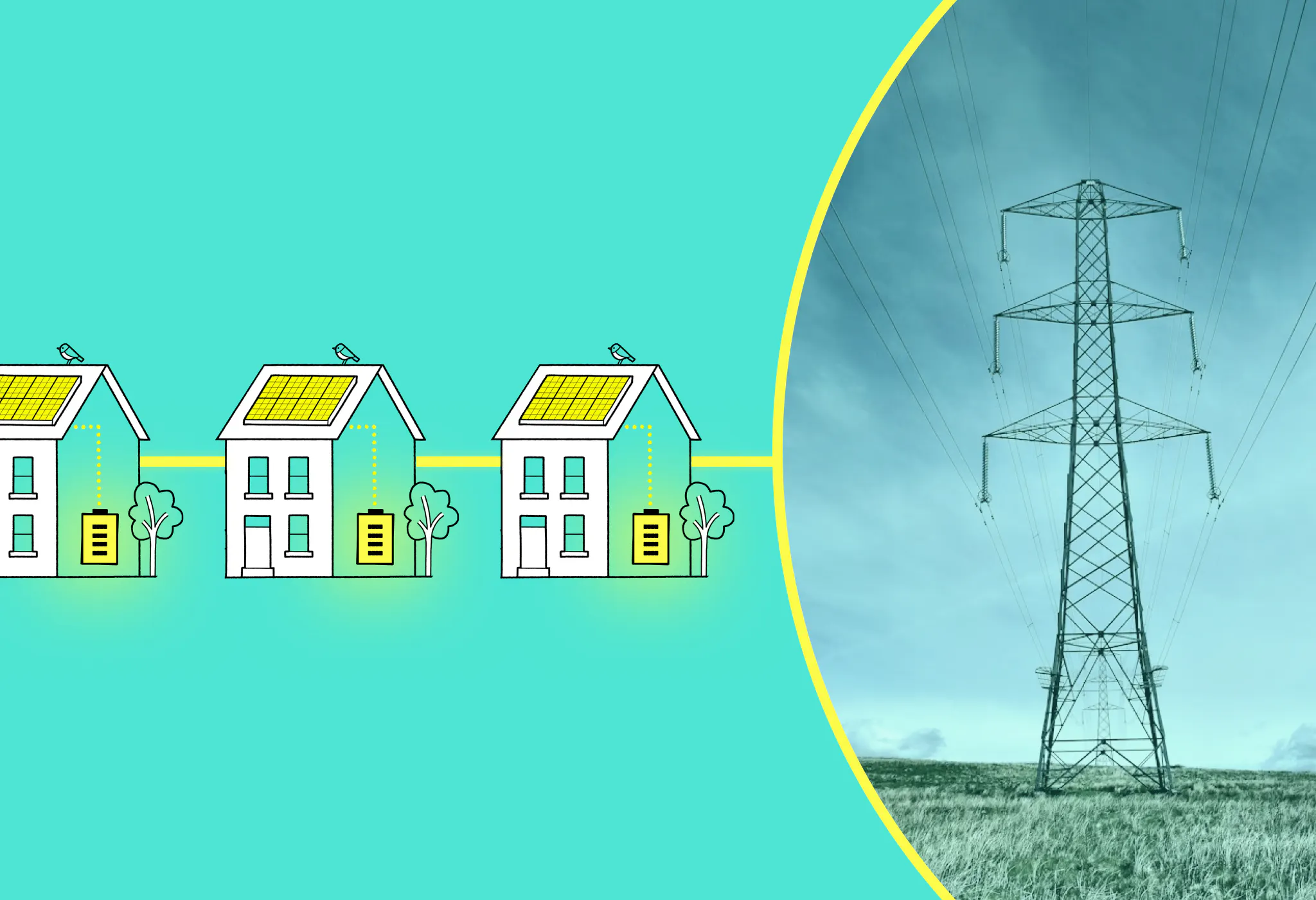
A VPP brings together multiple small renewable generators, storage batteries, and/or pieces of smart technology into one collective, controlled by a company, that can sell electricity to help the grid.
Participants, known as distributed energy resources (DERs), can include homes, businesses, and other organisations with devices that sit ‘behind the meter’.
VPPs can include lots of different devices, though they’re mainly associated with storage batteries.
Like a traditional power plant, a VPP can also adjust how much energy it’s providing to the grid at any given time – but unlike a standard plant, it only functions as an individual entity digitally. Physically, they can – and often do – span a whole country.
This means households can alleviate pressure on the grid while also profiting from energy trading – and on a much bigger scale than they could by themselves.
And every entity involved can benefit financially, since VPPs are designed to achieve savings for all participants.
Residential VPPs have only been possible here since batteries, EVs, and home chargers became popular, but they’re now in a position to help solve grid problems that were previously left to fossil fuel plants to address.
They got their start on these shores in 2019, via a trial by UK Power Networks, a Distribution Network Operator (DNO) that runs the hardware supplying east and south-east England with electricity.
The DNO stored energy in 45 homes’ batteries, providing an electricity source they could draw upon during peak times. It was a massive success, cutting the peak demand of these households by 60%.
Since then, VPPs have exploded in quantity, profitability, and popularity.
How do virtual power plants work?
VPPs use software to bring together DERs into one group, creating a large reservoir of electricity.
The company running the VPP can sell this electricity to help balance the national grid – that is, ensure that supply remains almost exactly the same as demand, which keeps the frequency around 50 hertz (Hz).
The grid needs to be balanced
National Energy System Operator (NESO), which runs Britain’s electricity transmission system, is tasked with maintaining this equilibrium. When it fails, the country can suffer widespread power outages.
To avoid this, NESO forecasts demand weeks or months in advance, then refines it a day or two before, using factors like weather, anticipated renewable energy generation, and even sporting events.
Generators, suppliers, and traders cover most of this demand by buying and selling electricity on the wholesale markets – but even with long-term contracts, day-ahead auctions, and intraday markets, energy is unpredictable.
Wind can drop, a cold snap can cause a spike in demand, or a power plant can go offline. That’s when NESO’s Balancing Mechanism comes into its own.
This is a 24/7 online marketplace in which approved participants can bid to increase or decrease output 60 to 90 minutes before every 30-minute period.
Staff at the Electricity National Control Centre in Wokingham will choose the most cost-effective option each time, taking around 3,100 actions per day on average.
VPPs can help
VPP participants can now benefit from something called ‘Quick Reserve’, a service that was fully launched in late 2025 to perform quick, pre-imbalance corrections – while allowing home batteries to join.
Residential batteries don’t compare with utility-scale batteries – unless you group hundreds or thousands of them together.
With strength in numbers – and an operator that controls every participant’s inverter – a VPP can quickly mass charge or discharge its batteries, which is necessary during ‘stress events’.
These occasions happen around four to six times per month, for one to two hours. In winter, they’re often due to supply falling below demand (e.g. if wind energy drops during the evening peak), which would require a VPP to discharge its batteries.
In summer, the most common stress event is supply exceeding demand (e.g. people using less electricity because they’re out enjoying the sun, which is supplying a lot of solar energy), so the main VPP activity is mass charging, to save this excess supply for later.
And because of the way the grid works, any energy released from your battery will typically be used locally.
We have our own Virtual Power Plant, and every Sunsave customer with compatible hardware can join it for free. To find out how much you could save with Sunsave, enter a few details below and we’ll provide an estimate.
Find out how much you can save
What kind of home do you live in?
How do virtual power plants affect your battery?
The VPP operator will control your battery, through your inverter. Some VPPs only take charge during grid stress events, while others require 24/7 control.
You may be able to pick the level of control you give your operator to charge and discharge your battery, but there’s no need to worry about not having enough space for your personal use.
VPP operators work in close harmony with your household, only take actions when it’s profitable for you, and in most cases won’t interfere with your normal consumption.
In fact, VPP measures often align with homes that use a time-of-use tariff to charge their battery overnight on an off-peak rate, consume some of that energy during the day, then export the rest to the grid before the next off-peak period.
So the only reason you’d need to set aside some reserve battery capacity when you join a VPP is if you wanted to have backup power available for power outages – but this shouldn’t be a concern for most homes in the UK.
The average household goes through 0.4 outages per year, and loses electricity for roughly 36 minutes in total, according to the latest Ofgem report.
A good VPP operator will also set a limit on the number of cycles that your battery can perform over a set period of time, to avoid overcycling and reducing the battery’s lifespan.
How much can you earn from a virtual power plant?
It's possible to earn hundreds of pounds per year with a VPP, although there's no simple way of estimating it.
This is unlike solar panels, where you can forecast expected output using efficiency and irradiance data, and then multiply this by the price of electricity.
Sunsave's Virtual Power Plant currently guarantees a minimum monthly payment of £15 for the first 12 months if you're on Home Battery Plus, and for the first 18 months on Solar & Battery Plus. More on this further down.
Tesla’s Florida-based VPP can earn participants “up to $275 per Powerwall per year” according to the company, though you must own a Tesla Powerwall battery to join.
And in 2025, the 217,000 customers in Sunrun’s VPP earned more than $17 million (£12.8 million), which added up to $78 (£59) per household, on average.
This isn’t instead of your usual energy bill savings and export income that you get from going solar, either – it’s an additional benefit.
And you don’t need to change your energy supplier to join a VPP – unless you sign up for Octopus’s Intelligent Octopus Flux tariff, which is essentially a VPP.
The amount you earn will depend on how many other households have joined your VPP, your operator’s decisions, how much help the grid needs in a given year, and the size of your battery.
Getting a larger battery will naturally lead to more VPP earnings, as operators pay for every kilowatt-hour (kWh) of electricity you store or supply – so the more kWh of capacity your battery has, the more you can make.
Think of it this way: if you were being paid to keep and provide water, you’d rather have a large water tank that can fit hundreds of litres, than a portable five-litre model.
You can also make more money with a larger inverter, as this will allow your operator to charge and discharge your battery more quickly – like a bigger pipe that allows more of your electricity to flow through at once.
Winter is the most popular time for VPP activity, as demand often outstrips supply. This happens largely because days are shorter – so more lighting is needed – and colder temperatures lead people to want hot food more often.
Because of this, households usually make their highest VPP earnings during winter.
Will VPPs become more profitable in the future?
The frequency of stress events will probably increase over time in the UK, as more renewable capacity is added to the grid – and the rapid response time of VPPs means they’ll likely join other balancing services in the coming years.
For instance, in particularly urgent moments, NESO relies on specialised balancing services.
The fastest of these are frequency response services, such as Dynamic Containment and Dynamic Moderation – teams within NESO that can rapidly activate generators in charge of many batteries.
Only utility-scale batteries are currently allowed to participate in these services, but home VPPs may join them in the future, bringing even more financial benefit to households.
Why do we need virtual power plants?
We need VPPs because electricity demand is continually increasing.
This is partly due to the growth of heat pumps and electric vehicles, but mainly down to the rapidly growing number of data centres needed to power AI and cloud computing.
Reaching the legally mandated goal of net zero emissions by 2050 will require the UK to consume “twice as much electricity as today by 2040”, according to the Climate Change Committee.
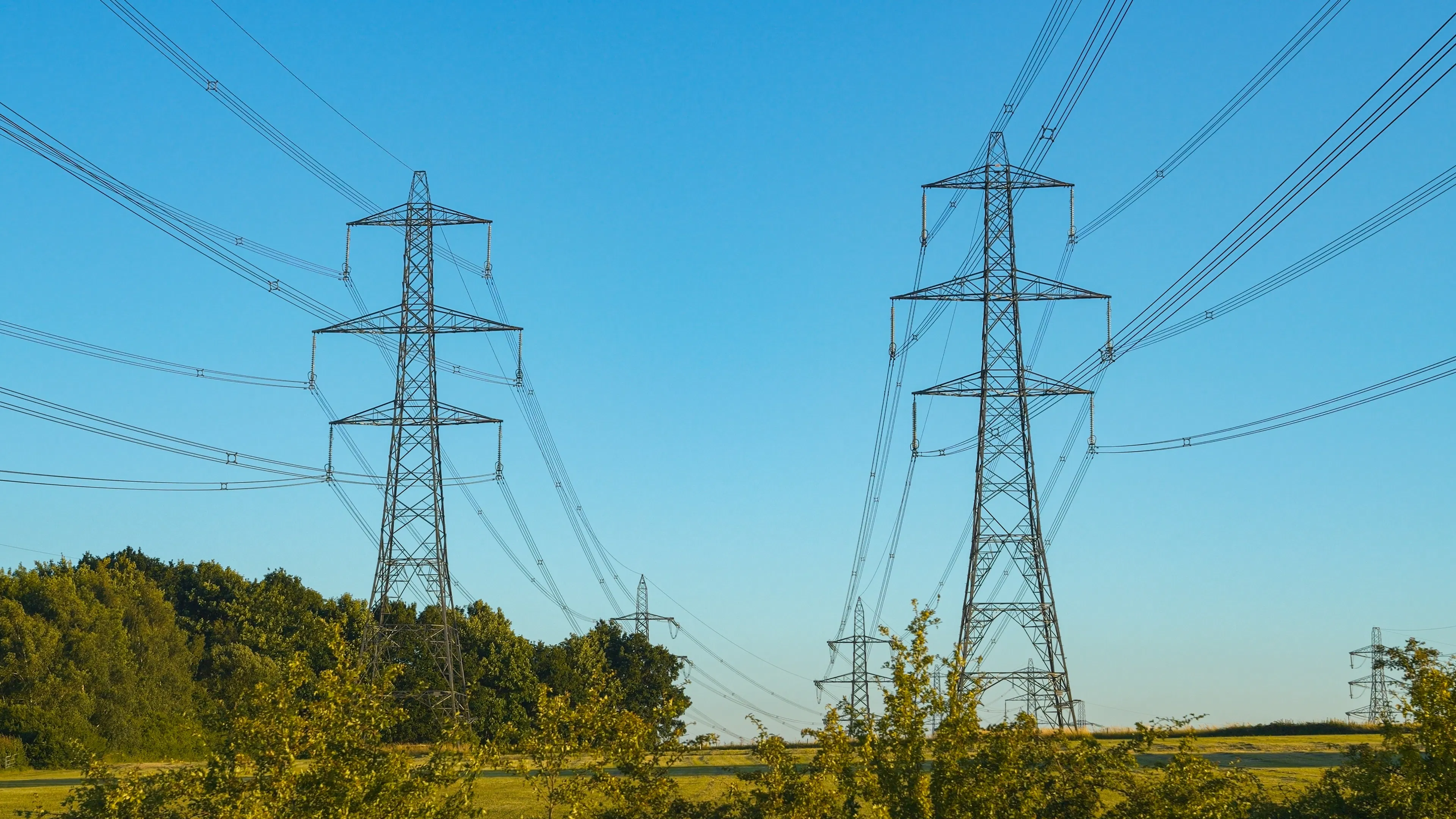
The UK grid is already under serious strain, not helped by the fact that more than half of all power cables – along with about one-third of its transformers and switch gear – date back to the 1970s.
And more than one-third of other grid equipment, including communications systems, fire suppression, and protection relays, is reportedly even older.
This pressure on an aging electricity grid will only increase as the years go by, even with the government spending £10.3 billion to redevelop it.
It’s expected that households will pay for these improvements via higher energy bills, but VPPs should help soften this blow.
There are three key ways that VPPs help with grid operations:
 Less reliance on peaking plants
- Cheaper, safer grid expansion
- Easier grid operation
Less reliance on peaking plants
VPPs may spell the end for peaking plants, which are power stations – mostly fuelled by gas – that the grid calls upon when other sources aren’t meeting demand.
This is good both because it’ll cut down on carbon emissions, and because the UK grid pays peaking plants a premium – sometimes totalling millions of pounds per day.
On 12 December 2022, the grid paid a record £27 million to peaking plants, including an eye-watering rate of £6,000 per MWh to ScottishPower’s gas-powered Rye House station.
For context, that’s 46 times as much as you’ll get for your electricity on a solar export tariff, on average.
And on 8 January 2025, gas power plant operators Vitol and Uniper were paid £17 million to keep two plants running. Swiss firm Vitol received more than £5,000 per MWh, while German supplier Uniper got £2,900 per MWh.
If renewable electricity can fulfil this need instead, then households and businesses can benefit without the grid spending ruinous amounts of money for more carbon emissions.
For example, as of January 2025, the US government is aiming to create VPPs with an overall capacity of 80-160 gigawatts (GW) by 2030, which it’s said would serve 10-20% of peak demand.
And relying on these VPPs is up to 60% more cost effective than using gas plants, according to the Massachusetts Institute of Technology.
Following this path may also bring down the high price of electricity, which is directly influenced by the cost of the last unit of electricity required to meet demand.
This is usually gas – in fact, gas sets the price of electricity about 98% of the time in the UK. If a renewable source took this role instead, it could make a huge difference.

Cheaper, safer grid expansion
The UK grid is building up to 620 miles of new onshore power lines, and more than 2,800 miles of offshore lines over a five-year period – more than twice the amount constructed over the past 10 years.
VPPs could allow this expansion to happen at a steadier, more affordable rate, as the UK increasingly electrifies its transport and heating networks over the coming decades.
Every day, the grid experiences peaks of demand that require the grid to move enormous amounts of electricity at once.
As well as providing electricity for these times, VPPs can also motivate large groups of people to shift their energy usage away from peak periods – just as the Demand Flexibility Service already does, but possibly with better rewards.
This reduces the strain on the grid and means its expansion – which must constantly stay ahead of the highest daily peak to avoid power cuts becoming too frequent – can be carried out at a more realistic speed.
Easier grid operation
By leaning on VPPs, the grid could also have an easier time maintaining its electrical frequency – meaning the number of times per second that an alternating current (AC) moves back and forth.
In the UK, our AC electricity travels 50 times per second, so our frequency is 50Hz.
The further apart supply and demand are, the harder it is to maintain this status quo – and without it, electrical products would simply stop working.
For instance, on 9 August 2019, lightning knocked two major power plants offline, leading the grid’s frequency to fall rapidly, which caused more than a million consumers to lose power.
How to choose a virtual power plant
If you’re wondering which VPP to join, it can be a bit bamboozling to choose between operators – and this feeling will only intensify as the number of VPPs rises.
It’s usually best to join a VPP operated by the same company that maintains your battery, as they’ll strike the right balance between maximising your VPP income and making sure your battery lasts for as long as possible.
A company that just acts as your VPP operator won’t be incentivised to look after your battery, and could significantly overcycle it.
This will lead to higher earnings in the short term – for you and the VPP operator – but you may be forced to replace your battery much sooner than the average battery lifespan of 10-12 years.
With batteries costing around £3,000 to £7,000, this outlay could far exceed all your VPP savings.
At Sunsave, we ensure our Virtual Power Plant doesn't overcycle your battery, by finding the right balance between optimised charging and discharging, and a long battery lifespan.


How big is a virtual power plant?
There’s technically no minimum or maximum limit when it comes to the size of a VPP, though they do have to be large enough to benefit operators.
For example, when Centrica and Sonnen started a VPP in the UK in 2020, it consisted of just “100 domestic batteries”.
This has since been dwarfed by operators like Kraken, which said in July 2025 that its VPP had reached a capacity of 2 gigawatts (GW), with more than 500,000 devices. This reportedly made it the largest residential VPP in the world.
Other VPP operators include German company 1KOMMA5°, which controls more than 500MW of capacity supplied by 50,000 systems. The firm has said this makes it “Europe's largest virtual power plant for private households”.
And Statkraft, a Norwegian state-owned business, has one of the largest VPPs in Europe – with a capacity of more than 10GW from over 1,000 generators – though this includes utility-scale plants.
Examples of virtual power plants in the UK
There's a wide variety of options for anyone looking to join a VPP, including Sunsave's own Virtual Power Plant.
Your best option will depend on which renewable products you have, what you’d like to buy in future, and how comfortable you’d feel giving a company some control over your energy usage.
You should also choose a VPP operator who looks after your battery. If they overcycle it, you may have to get a new one far sooner than expected – and the cost of a replacement battery could far exceed your VPP earnings.
Sunsave
Our Virtual Power Plant is available to all Sunsave customers with compatible hardware.
It's a network of our customers’ batteries, working together to help balance the grid, while earning money for every household involved.
We currently guarantee a minimum monthly payment of £15 for the first 12 months if you're on Home Battery Plus, and for the first 18 months on Solar & Battery Plus.
However, we’ve paid more than the guaranteed minimum amount every month so far, with an average payout of around £25, as of September 2026.
Our Virtual Power Plant is part of Sunsave Sona, our smart algorithm. It constantly works in the background to optimise your battery and ensure you're saving the most money possible.
You can monitor exactly how much money our Virtual Power Plant is earning you through our wonderful app.
Kraken
Kraken was part of Octopus Energy before becoming its own company in 2025, though Octopus retains a 13.7% stake.
It owns the biggest residential VPP in the world – a 2GW behemoth made up of 500,000 devices including EVs, solar panels, batteries, EV chargers, smart thermostats, and heat pumps.
The firm has said it’s saving consumers more than $200 million (£151 million) per year by charging batteries and turning on heat pumps when rates are cheaper.
Kraken also launched Intelligent Octopus Go in 2022, which as well as one of the best EV tariffs on the market, is also an extremely effective VPP.
EDF and Hypervolt
In January 2025, EDF and Hypervolt launched their own VPP targeted at EV chargers.
This scheme is different to Octopus’s because it’s a frequency response service. That means it helps the grid to maintain its electrical frequency and thus avoid power outages.
As with other EV tariffs like Intelligent Octopus Go, customers can tell the app how much charge they want and when they’ll need it by, and the two companies’ software will do the rest.
The VPP will take electricity from the grid when the frequency is high, and avoid doing so when the frequency is low.
And in November 2025, the two firms introduced UltraMode, which rewards VPP customers who opt in with monthly payments – again, just for allowing the software to pick the time when their EV charges.
Axle
Software provider Axle Energy launched its VPP in November 2024, and now accepts households with inverters made by the likes of Fox ESS, GivEnergy, Sigenergy, SolaX, and Solis.
If you join, you’ll give up all control of your battery to Axle, which means you won’t have to lift a finger as your earnings roll in.
Currently, the operator offers £1 per kWh during stress events, and a guaranteed minimum payment of £10 per month.
Axle will credit your account straight after each stress event, then top up your account to £10 if you haven’t hit that mark by the end of the month.
Tesla
Households in the UK with a Tesla Powerwall battery can access the Tesla VPP.
You’ll have to hand over control of your Powerwall to Tesla. The company will charge it when it’s profitable for your household and Tesla, then discharge it to the grid during high-demand periods.
Like most operators, Tesla has said it’ll make sure your battery has enough charge for when you need it, so in theory the VPP shouldn’t affect your day-to-day life.
It’s not clear how much participants are paid for their electricity, so you should clarify this before signing a contract to join the Tesla VPP instead of an export tariff.
Examples around the world
Companies in other countries – especially the US – have stolen a march on UK firms when it comes to VPPs.
Sunrun, a solar subscription service based in California, has the biggest VPP in the US, with more than 106,000 households in its 17 VPP programmes, – five times more than it had a year earlier.
In 2025, the VPP helped keep the lights on in Puerto Rico when the island’s power plants failed, provided critical energy during periods of extreme heat in Texas, and responded to more heat waves in the north-east.
Next Kraftwerke is the largest VPP in Europe, with 15.5GW of capacity under its control – a great deal higher than Kraken’s 2GW.
The German company oversees businesses including solar farms, wind farms, battery storage facilities, biogas plants, and geothermal plants.
All generators need to do is connect a Next Kraftwerke’s remote control unit, called a Next Box, to their fuse board, and they become part of the virtual power plant.
Italian company Ego has a VPP made up of 1,500 production plants, including wind, solar, and hydroelectricity plants.
The Genoa-based firm had 1.6GW of capacity under its control when it was acquired by Shell in 2023.
This followed Next Kraftwerke being bought by Shell in 2021 – showing that energy giants have identified VPPs as offering high potential long-term value.
Is it worth joining a virtual power plant?
If you’ve got a battery or an EV with a home charger, it’s worth joining a VPP. You’ll help balance the grid, and earn additional income without lifting a finger.
You just need to ensure your VPP operator cares about maintaining your battery’s internal chemistry and lifespan, so it doesn’t degrade more quickly than usual.
This is usually best achieved by joining a VPP with the same company that operates your maintenance package, as they’ll be motivated to balance its wellbeing and your earnings.
VPPs can also help lower energy prices and reduce power cuts across your area, so it’s a worthwhile endeavour for the whole community.
We have our own Virtual Power Plant, and every Sunsave customer with compatible hardware can join it for free. To find out how much you could save with Sunsave, enter a few details below and we’ll provide an estimate.
Find out how much you can save
What kind of home do you live in?
Virtual power plants: FAQs
Related articles

 Josh Jackman
 Josh Jackman
Written byJosh Jackman
Josh has written about the rapid rise of home solar for the past seven years. His data-driven work has been featured in United Nations and World Health Organisation documents, as well as publications including The Eco Experts, Financial Times, The Independent, The Telegraph, The Times, and The Sun. Josh has also been interviewed as a renewables expert on BBC One’s Rip-Off Britain, ITV1’s Tonight show, and BBC Radio 4 and 5.