- Solar advice hub
- Batteries
- The 8 best battery tariffs
The 8 best battery tariffs
Here are the top battery tariffs, how much they could save you, and which ones would suit your household.


Why you can trust our content
We know that the solar industry is full of misinformation, but we only use reliable sources, including:
- Our experienced solar experts, installers and system designers
- Our own database of solar & battery system designs
- Authoritative bodies like MCS and the UK government



Calculate savings
What kind of home do you live in?


Calculate savings
What kind of home do you live in?
At a glance
Battery-only installations are becoming increasingly popular in the UK, thanks to falling battery prices and the rise of new tariffs that let you import cheap electricity at off-peak times – or in some cases, at all times.
This allows people to save hundreds of pounds per year on their electricity bills.
In this guide, we’ll go through the ins and outs of the best battery tariffs on the market, tell you how easy (or difficult) it is to sign up to them, and make recommendations based on your preferences.
If you’re wondering how much you could save with a standalone battery, head here to learn more and get a quote.
What are the best battery tariffs?
The best battery tariffs are British Gas Store&Reward, British Gas Store&Save, and 100green Tide Smart.
When you’re choosing between battery tariffs, the off-peak rate will usually be the thing that providers talk about most – though some tariffs come with just one flat rate.
And to maximise your savings, it’s worth looking deeper anyway.
You should consider a tariff’s standing charge, as well as any peak or day rates and hours it comes with.
There are often other conditions, too – like exit fees.
We’ll keep regularly updating this list, as energy companies change their tariffs or introduce new ones to meet the rising demand.
94% of new solar panel installations in the UK include a battery, according to data from Flexi-Orb and EPVS, which has led to a rise in battery tariffs – and we expect this to continue.
Provider | Tariff | Off-peak rate (p/kWh) | Time period | Peak rate (p/kWh) | Day rate (p/kWh) | Standing charge (p/day) | Annual savings * |
|---|---|---|---|---|---|---|---|
British Gas | Store&Reward | 22 | All day | N/A | N/A | 51.665 | £610 ** |
British Gas | Store&Save | 11 | All day | N/A | N/A | 51.665 | £534 |
100green | Tide Smart | 7.43 | 12am-7am | 46.96 | 34.63 | 54.14 | £508 |
EDF | Empower Fixed | 10.361 | 1am-4am | 30.22 | 20.22 | 63.62 | £462 |
100green | Tide Lifestyle | 15.75 | 12pm-3pm, 7:30pm-10:30pm, 3am-6am | 29.23 | N/A | 53.94 | £388 |
Good Energy | Good Energy Heat Pump | 14 | 5am-9am, 1pm-4pm | 30.69 | N/A | 57.39 | £326 |
British Gas | Charge Power | 14.963 | 12am-5am | 29.925 | N/A | 53.336 | £317 |
Octopus | Agile Octopus | 18.17 † | N/A | N/A | N/A | 48.79 | £301 |
How do battery tariffs work?
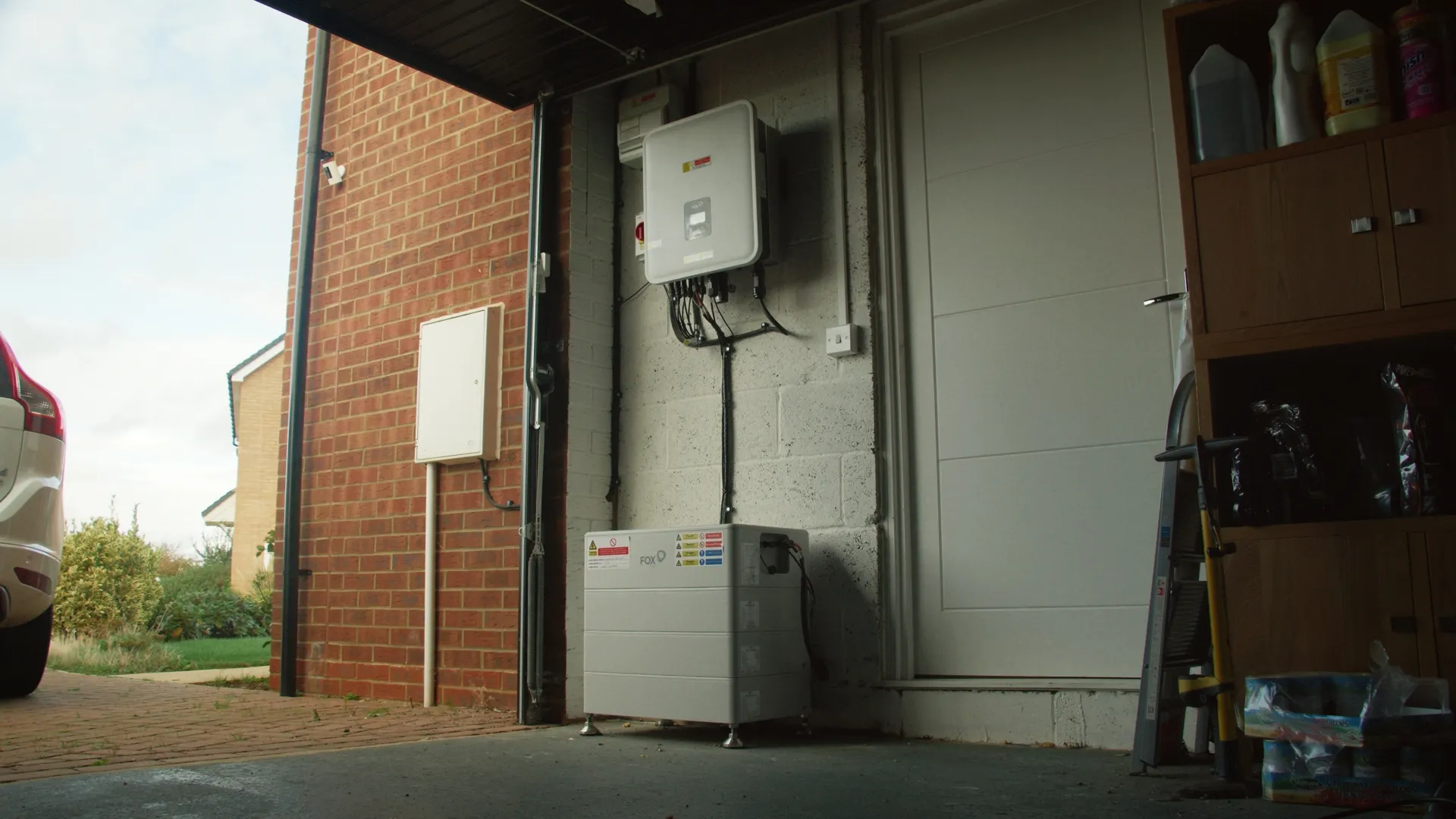
Battery tariffs provide you with a lower rate you can use to charge your battery for less.
You can charge your battery to full during these times, then use this electricity to power your home for the rest of the day. This cuts the amount of expensive energy you need to buy from the grid.
Some tariffs come with daily off-peak hours, while others offer a low, fixed rate throughout the day.
Depending on the tariff, you should be able to cover most or all of your usage with low-cost electricity. Even if you're on an off-peak rate that only lasts a few hours, you can effectively pay this rate most of the time.
Setting up your battery to charge at off-peak times should be pretty straightforward, and a good installer will help you put this schedule in place.
Signing up for a battery tariff is relatively simple, too. If you’re switching from a different supplier, you may have to register for a standard tariff first, but the whole process shouldn’t take longer than a few weeks.
So you can easily take advantage of appealing import tariffs – and though you can’t yet sign up for any export tariffs with a standalone battery, this could change soon.
The best battery tariffs: explained
Here are all the most important things to know about the best battery tariffs, including all their rates, their eligibility criteria, and what your savings might look like.
We’ll also tell you how to sign up for each tariff. You may have to switch suppliers to get the best rate, but that one step could cut your electricity bills by hundreds of pounds per year.
1. British Gas Store&Reward
This fixed tariff, which is only available to Sunsave Home Battery customers, launched in June 2026 with a flat rate of 22p per kilowatt-hour (kWh).
You can access this low-cost electricity – which is 16% lower than the July 2026 energy price cap – every day, at any time, without paying a peak rate.
What's more, you'll also receive a £37.50 monthly bill credit, guaranteed for 24 months.
So you'll get £900 over the course of two years, while also enjoying cheaper electricity bills.
All you need to do is give British Gas control of your battery – which is perfect, seeing as you can access the same electricity rate regardless.
Full tariff profile
Category | Information |
|---|---|
Off-peak rate (p/kWh) | 22 |
Time period | All day |
Off-peak hours/day | N/A |
Peak rate (p/kWh) | N/A |
Standing charge (p/day) | 51.665 |
Total annual savings * | £610 ** |
Fixed or variable | Fixed |
Exit fee | £75 |
How to switch to British Gas Store&Reward
The only way to access Store&Reward is via Sunsave Home Battery.
To qualify, you must be a homeowner aged between 18 and 75, not have solar panels, an EV charger, or a heat pump, and use 3,100kWh to 4,500kWh of electricity per year.
You'll also have to allow British Gas to take control of your battery charging.
And as with all the tariffs on this list, you'll need a working smart meter.
Once Sunsave has installed your battery, British Gas will help you switch tariffs.
It should be a simple process that involves providing the supplier with your basic information and bank details.
And it should only take three weeks at most for the two suppliers involved to sort it out though, thanks to the Energy Switch Guarantee.
All the major energy companies have signed up to this series of standards, which was created by trade association Energy UK.
2. British Gas Store&Save
Store&Save is also reserved exclusively for Sunsave Home Battery customers, and also started in June 2026 – but this tariff comes with a flat rate of just 11p per kWh.
This is comfortably the lowest flat rate on the market, and would be top of this list if it wasn't for the £37.50 monthly credit offered by Store&Reward.
It may still save you more money, though only if your electricity consumption comfortably exceeds 4,000kWh per year.
Just like its sibling tariff, it provides a below-average standing charge and no peak rate, with the easily fulfilled requirement that you let British Gas control your battery.
Store&Save is built to suit households that use more electricity per year, while Store&Reward is great for an average or low-usage home.
Full tariff profile
Category | Information |
|---|---|
Off-peak rate (p/kWh) | 11 |
Time period | All day |
Off-peak hours/day | N/A |
Peak rate (p/kWh) | N/A |
Standing charge (p/day) | 51.665 |
Total annual savings * | £534 ** |
Fixed or variable | Fixed |
Exit fee | £75 |
How to switch to British Gas Store&Save
The switching process is the same for both exclusive British Gas battery tariffs: get a home battery installed by Sunsave, then British Gas will get in touch and move you over.
And again, the eligibility criteria require that you own a smart meter, be a homeowner who's aged 18 to 75, not have solar panels, an EV charger, or a heat pump, and use 3,100kWh to 4,500kWh per year.
You must also give British Gas control of your battery charging.
If you're already with the supplier, you can switch online simply and quickly, as long as you qualify.
3. 100green Tide Smart
Tide Smart is more of a standard time-of-use tariff, with a single 12am-7am off-peak period per day.
During these seven hours, you can charge your battery and power your home for roughly 7.43p per kWh, which is the lowest price on the market.
It’s also more than enough time for you to fill your battery, considering the average model charges to full in around two hours, according to our research.
If your battery runs dry at any point, you'll have to either pay the 34.63p per kWh day rate or the peak rate of 46.96p per kWh.
Thankfully, this particular expensive 4pm-8pm peak period just applies on weekdays. On weekends, you'll only ever pay the off-peak or day rate.
Tide Smart is variable, so technically it could change at any time – but if it does, you can switch tariffs without any exit fee.
Full tariff profile
Category | Information |
|---|---|
Off-peak rate (p/kWh) | 7.43 |
Time period | 12am-7am |
Off-peak hours/day | 7 |
Peak rate (p/kWh) | 46.96 |
Day rate (p/kWh) | 34.63 |
Standing charge (p/day) | 54.14 |
Total annual savings * | £508 |
Fixed or variable | Variable |
Exit fee | N/A |
How to switch to 100green Tide Smart
You can sign up for this tariff online, with just your personal details, address, and banking information.
You don't need to prove you have a battery, because 100green welcomes all households to this tariff.
However, the supplier rightly states that Tide Smart is best for homes with solar panels and/or a battery.
4. EDF Empower Fixed
Empower Fixed provides households with a daily 10.361p per kWh off-peak rate between 1am and 4am.
This is an excellent offering, as long as your inverter can charge your battery to full in three hours.
Most battery tariffs counterweight a cheap off-peak period with rates that soar above the price cap – but EDF partly bucks this trend.
Empower Fixed's day rate is 20.22p per kWh, which is significantly lower than the July 2026 price cap.
It's only between 4pm and 7pm that your rate will rise above the price cap, and even then, 30.22p per kWh is relatively decent.
Plus, despite the tariff being fixed, it doesn't come with an exit fee, which is rare.
Full tariff profile
Category | Information |
|---|---|
Off-peak rate (p/kWh) | 10.361 |
Time period | 1-4am |
Off-peak hours/day | 3 |
Peak rate (p/kWh) | 30.22 |
Day rate (p/kWh) | 20.22 |
Standing charge (p/day) | 63.62 |
Total annual savings * | £462 |
Fixed or variable | Fixed |
Exit fee | N/A |
How to switch to EDF Empower Fixed
As long as you have a battery, a smart meter, and pay by Direct Debit, you should be able to switch to Empower Fixed with no trouble.
First, you'll need to join EDF's standard variable tariff and create an EDF online account.
You can then sign up for Empower Fixed by emailing hello@edfenergy.com.
5. 100green Tide Lifestyle
Tide Lifestyle's off-peak rate is a relatively expensive 15.75p per kWh, and it's one of the more complicated tariffs around – but it's still well worth considering.
After all, you can access this cheaper rate for an impressive nine hours per day, even if it is across three different time periods.
So you should schedule your battery to charge and your appliances to run from 12pm to 3pm, 7:30pm to 10:30pm, and 3am to 6am.
This tariff also comes with one of the lowest peak rates on the market, at around 29.23p per kWh, and two hours of free electricity on Sundays, between 12pm and 2pm.
Full tariff profile
Category | Information |
|---|---|
Off-peak rate (p/kWh) | 15.75 |
Time period | 12pm-3pm, 7:30pm-10:30pm, 3am-6am |
Off-peak hours/day | 9 |
Peak rate (p/kWh) | 29.23 |
Day rate (p/kWh) | N/A |
Standing charge (p/day) | 53.94 |
Total annual savings * | £388 |
Fixed or variable | Variable |
Exit fee | N/A |
How to switch to 100green Tide Lifestyle
You can switch to Tide Lifestyle online, and all you'll need to provide is your address, personal details, and bank account information to set up a Direct Debit.
There's no need to prove that you have a battery or any other device.
Like all of 100green's time-of-use tariffs, Tide Lifestyle is open to every household.
6. Good Energy Heat Pump
Despite having ‘heat pump’ in its name, this tariff has been open to all households regardless of heat pump ownership ever since its launch in November 2024.
Its 10p per kilowatt-hour (kWh) off-peak rate has risen to 14p per kWh since then, but this is still a decent offering. It’s also active for seven hours per day, which is more than some.
You can fill your battery from 5am to 9am, use this low-cost electricity for the rest of the day – and you get another off-peak period from 1pm to 4pm.
As it’s best to only cycle your battery once per day, we wouldn’t recommend using this 1pm-4pm spell to charge up again – but you should use it to run energy-intensive appliances.
Having these seven off-peak hours should allow you to cheaply run your dishwasher, oven, washing machine, and tumble dryer – even doing multiple loads of laundry – without constantly checking the clock.
The tariff’s peak rate is also better the average, though its standing charge is one of the highest on this page, as is its £75 exit fee for switching suppliers.
Full tariff profile
Category | Information |
|---|---|
Off-peak rate (p/kWh) | 14 |
Time period | 5am-9am, 1pm-4pm |
Off-peak hours/day | 7 |
Peak rate (p/kWh) | 30.69 |
Day rate (p/kWh) | N/A |
Standing charge (p/day) | 57.39 |
Total annual savings * | £326 |
Fixed or variable | Fixed |
Exit fee | £75 |
How to switch to Good Energy Heat Pump
You can switch to Good Energy Heat Pump straight away online – you just need your address and bank details, as you would while switching to any tariff.
If Good Energy doesn’t currently supply your electricity, the sign-up process will be the same, but there may be a delay as the move goes through – which is normal.
7. British Gas Charge Power
Charge Power provides you with a 12am-5am off-peak period that matches the majority of the best EV tariffs on the market.
Launched in January 2026, this fixed-rate tariff comes with an off-peak rate that's a bit higher than the average.
However, its peak rate, standing charge, and £50 exit fee are better than many.
Full tariff profile
Category | Information |
|---|---|
Off-peak rate (p/kWh) | 14.963 |
Time period | 12am-5am |
Off-peak hours/day | 5 |
Peak rate (p/kWh) | 29.925 |
Day rate (p/kWh) | N/A |
Standing charge (p/day) | 53.336 |
Total annual savings * | £317 |
Fixed or variable | Fixed |
Exit fee | £50 |
How to switch to British Gas Charge Power
If you’re already getting your energy from British Gas, the switch should be quick and easy to carry out online.
If you’re switching energy companies, you’ll need to join British Gas’s standard variable tariff first, then make the switch to Charge Power.
Once again, you’ll just need your home and bank details to sign up.
8. Agile Octopus
This tariff is completely unlike the others on this list.
With Agile Octopus, every 30-minute period of the day has its own price, to reflect the shifting nature of the wholesale electricity market.
Every day around 4pm, you’ll find out what the next day’s prices will be – and while that may all sound intimidating, there are some things you can reliably expect.
The most expensive period is almost always 4pm to 7pm, and the cheapest times tend to be at night.
Octopus has also put some safeguards in place. If the wholesale price spikes, the tariff has a £1 per kWh price cap – and if the market explodes, you can leave at any time with no exit fee.
The unpredictability goes both ways, too. Agile’s rate can fall below zero, meaning you could get paid to use electricity, in a phenomenon Octopus calls ‘plunge pricing’.
To make the most of this tariff, you should keep an eye on the daily prices and shift your usage accordingly – which can just mean checking your Octopus app before you set your battery's schedule.
If you don’t regularly check the prices and simply spread your electricity usage across the day, you’ll still save hundreds of pounds per year, on average – but if you take a more proactive approach, you could save loads more.
For more information, read our full guide to Agile Octopus.
Full tariff profile
Category | Information |
|---|---|
Off-peak rate (p/kWh) | 18.17 † |
Time period | N/A |
Off-peak hours/day | N/A |
Peak rate (p/kWh) | N/A |
Standing charge (p/day) | 48.79 |
Total annual savings * | £301 |
Fixed or variable | Variable |
Exit fee | £0 |
How to switch to Agile Octopus
It should take just a few clicks for households already on Octopus to join Agile.
New customers will need to wait a bit longer after signing up online, with Octopus saying “it generally takes us around 14 days to connect to a smart meter so we can read it remotely”.
This is still within the three-week industry limit for switching suppliers.
Summary
The best battery tariff depends on your electricity usage habits and how willing you are to change them to maximise your savings, but it’ll most likely be British Gas Store&Reward or Store&Save.
If you're able to use exclusively off-peak electricity, then 100green Tide Smart's low rate can boost your savings even further, but that's not usually realistic.
If just a small percentage of your usage creeps over to the day rate – not even the peak rate – you'll be better off with one of the two British Gas tariffs.
In any case, signing up to a battery tariff should save you hundreds of pounds per year on your electricity bills.
If you’re wondering how much you could save with a standalone battery, head here to learn more and get a quote.
FAQs



Related articles
 Josh Jackman
 Josh Jackman
 Josh Jackman
 Josh Jackman
Written byJosh Jackman
Josh has written about the rapid rise of home solar for the past seven years. His data-driven work has been featured in United Nations and World Health Organisation documents, as well as publications including The Eco Experts, Financial Times, The Independent, The Telegraph, The Times, and The Sun. Josh has also been interviewed as a renewables expert on BBC One’s Rip-Off Britain, ITV1’s Tonight show, and BBC Radio 4 and 5.